Last updated November 21, 2026
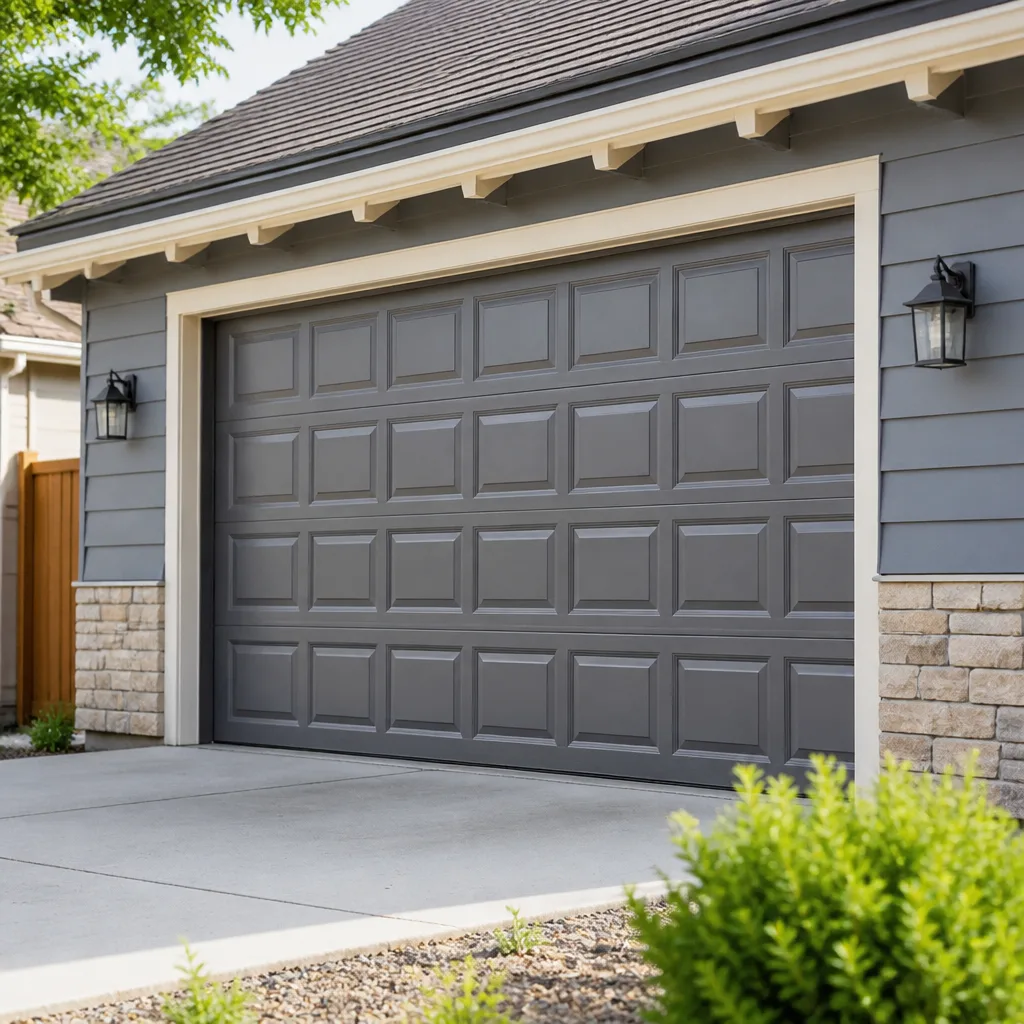 Raised-panel steel
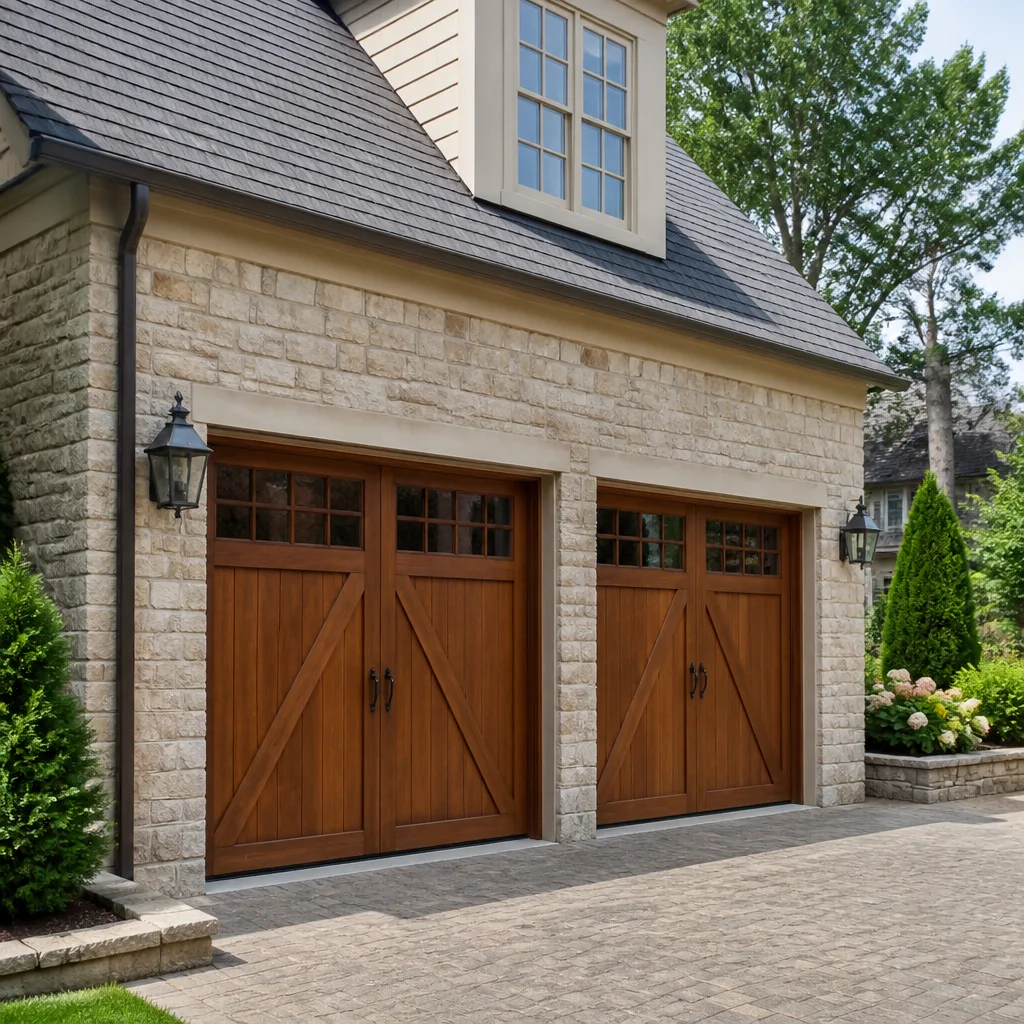 Carriage house
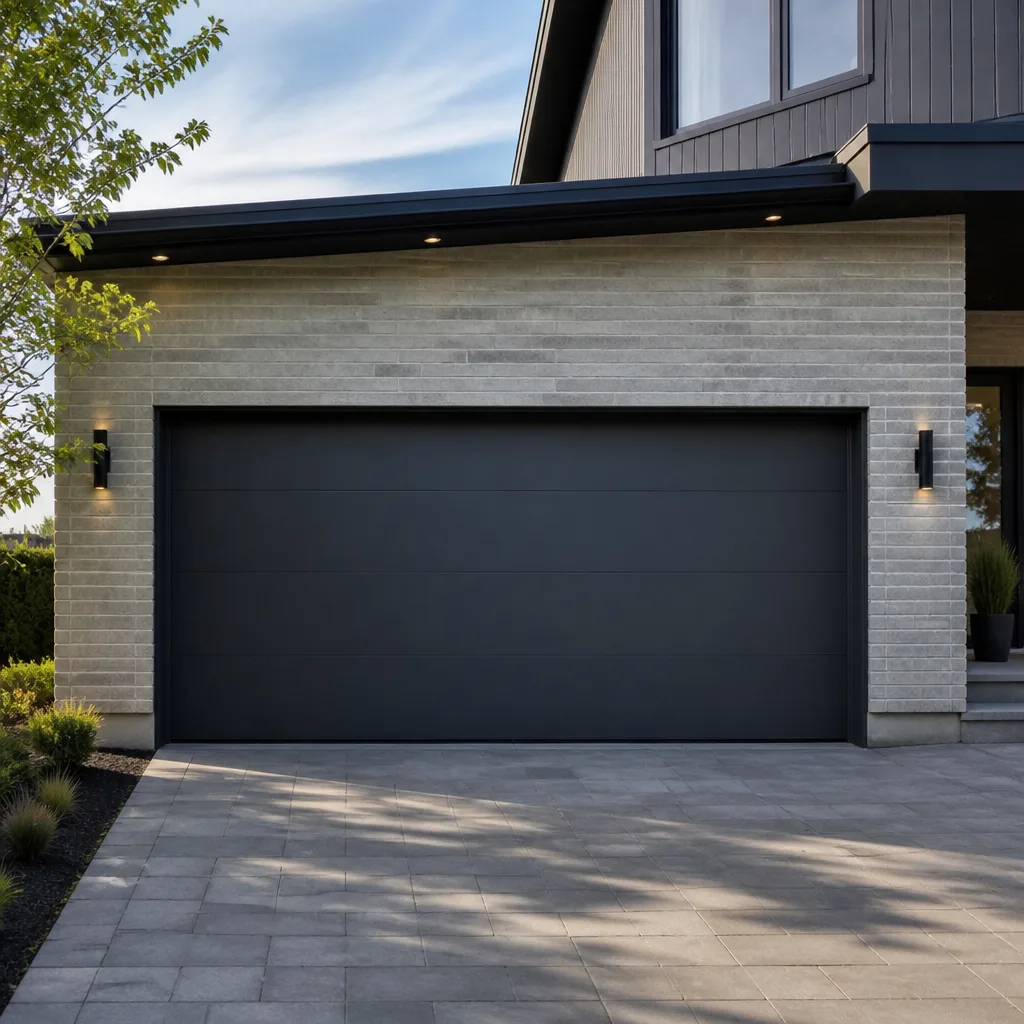 Modern flush
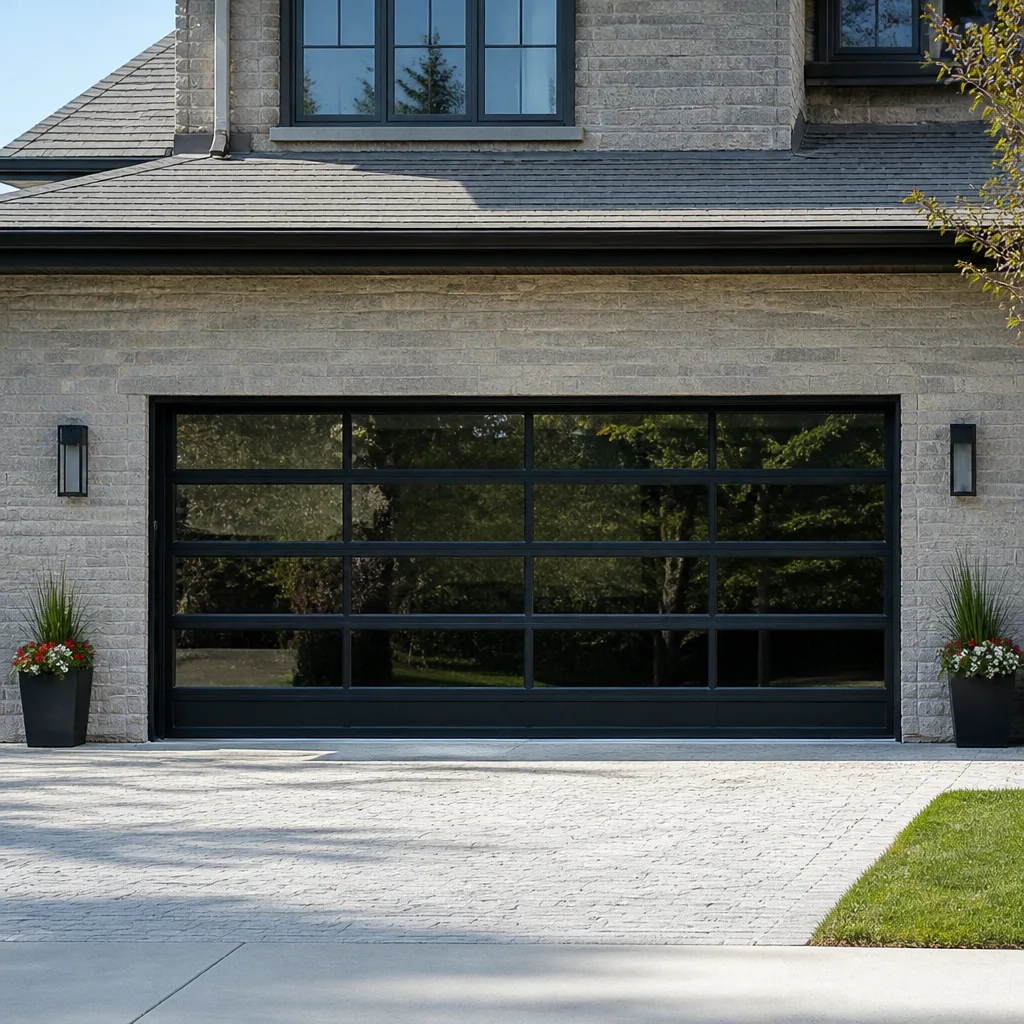 Full-view glass
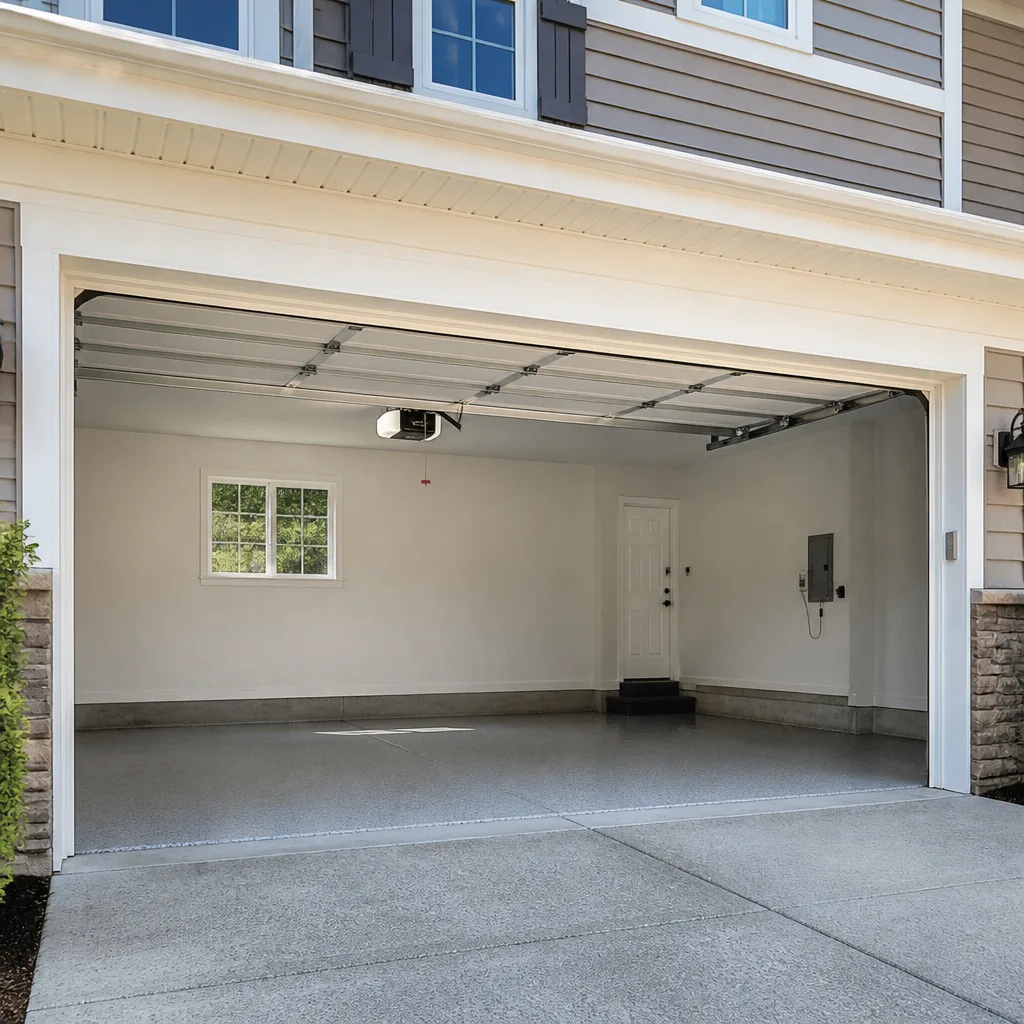 LiftMaster openers
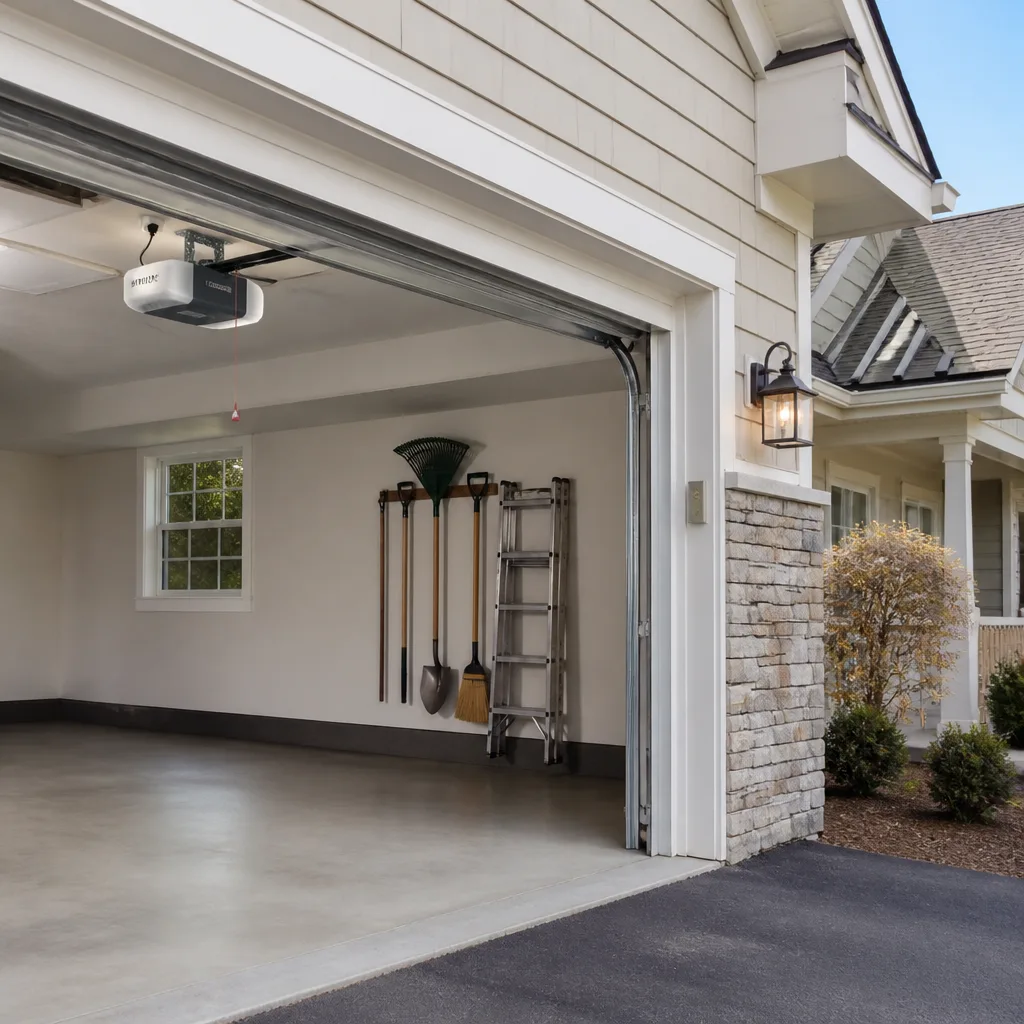 Chamberlain openers
Full 25-point door and opener safety check with every visit - springs, cables, rollers, tracks, and your LiftMaster or Chamberlain opener included
You get a price before we start. It does not change when the pro arrives.
Get your free estimateChoosing the Right Garage Door Brand: A Buyer’s Guide for Highland Park
The best-reviewed garage door brand in the country is the wrong brand for you if nobody nearby stocks the parts. That’s the hard truth that never makes it into a national best-of list. Reviews measure how a door feels and looks on day one. They don’t tell you what happens when a torsion spring snaps in February or an opener’s travel module fails and the replacement is on a shipping truck from three states away. For a homeowner in Highland Park, brand choice is a local question as much as a national one. In this guide we’ll walk through how opener brands actually hold up across the Pittsburgh metro, how to read a warranty as a claims process rather than a number, why model lines matter more than brand names, and what to ask a technician before you commit.
Quick Answer
The right garage door brand in Highland Park is the one your local technician knows well and can get parts for quickly. LiftMaster and Chamberlain openers have the deepest service and parts support across the Pittsburgh metro, while Clopay, Amarr, Wayne Dalton, and Raynor door lines are all reasonable when the specific model line and warranty terms check out. Between brands with similar reputations, choose the one with a local parts network and a technician familiar with its quirks. That decision, not the brand on the box, is what keeps a door running.
Styles & brands we work with
- Raised-panel steel
- Carriage house
- Modern flush
- Full-view glass
- LiftMaster openers
- Chamberlain openers
Table of Contents
- The Brand Is Not the Product: Model Lines and Where Quality Actually Lives
- Which Opener Brands Have Real Parts Networks in the Pittsburgh Metro?
- Door Panel Manufacturers and What Their Warranties Actually Cover
- Why Local Parts Availability Beats National Reputation
- Smart Home Compatibility: What “Works With” Really Means
- What to Ask a Technician About Brands Before You Buy
- How Pittsburgh-Area Weather Affects Brand Choice
- Why Installation Quality Can Matter More Than the Brand
The Brand Is Not the Product: Model Lines and Where Quality Actually Lives
When a homeowner searches for the best garage door brand in Highland Park PA, they usually end up on a list that ranks LiftMaster, Chamberlain, Genie, Clopay, and Amarr by name. That ranking is a starting point, not an answer. The truth is that most of these manufacturers sell several model lines under one brand, and the lines differ in ways that matter long before the badge on the opener does. A builder-grade line and a premium line from the same company can share a logo and almost nothing else.
Here’s how the layers stack up, from most to least important:
- Model line. The specific product family. This is where insulation, steel gauge, opener drive type, and warranty length actually live.
- Brand engineering. The design philosophy across model lines. Does the manufacturer favor belt drives, screw drives, chain drives? Are torsion springs standard, or extension springs in cheaper lines?
- Manufacturer reputation. How the company handles defects, warranty claims, and parts. This matters, but only after the model line and brand engineering check out.
- National reviews. The least useful layer for a local buyer, because they’re written by people in different climates with different installer quality.
When we work on a door in Highland Park, the diagnosis often starts with one question: which model line is this? A Craftsman opener from one era has almost nothing in common with a Craftsman from another. A Wayne Dalton door panel manufactured for a builder contract installs and lasts differently from the same brand’s premium line. Brand awareness alone won’t tell you what’s failing.
This is also why brand-agnostic generalists get diagnoses wrong. If a technician works on three brands a month, they learn the model quirks by accident. If they work on eight of the most widely installed brands regularly – LiftMaster, Chamberlain, Genie, Clopay, Amarr, Wayne Dalton, Craftsman, and Raynor – they learn those quirks as baseline knowledge. That’s the practical difference between a fast, correct diagnosis and a return visit next week.
Which Opener Brands Have Real Parts Networks in the Pittsburgh Metro?
Opener brands split into two practical tiers in the Pittsburgh metro: those with local parts support and those that require an order. LiftMaster, Chamberlain, Genie, and Craftsman generally have the deepest local parts availability. Raynor openers, which are less commonly installed on the residential market, sometimes need a longer lead time. In our experience the brands with the widest dealer and parts coverage are the ones your technician can repair in a single visit more often, and that’s the number that matters when an opener fails and you need the door working before the end of the week.
Here’s a practical overlay of the opener brands we see most often in Highland Park and the surrounding Pittsburgh neighborhoods:
- LiftMaster. One of the broadest dealer and parts networks in the country. Belt, chain, and screw drive options. MyQ connectivity on most current models, with accessories available locally.
- Chamberlain. Sibling brand to LiftMaster with overlapping internals. Parts availability is strong, which means a failed logic board or travel module can often be replaced the same visit instead of ordered.
- Genie. Solid parts coverage through the Pittsburgh metro. Screw drive and belt drive systems, with model-specific quirks that a technician familiar with the line recognizes quickly.
- Craftsman. Widely installed in older homes in this area because of builder relationships. Model era matters enormously – the earlier and later generations of Craftsman openers diagnose very differently.
- Raynor. Less common in residential installs, more common on doors than openers. Parts availability depends on the specific model, so ask before assuming a same-visit repair.
The broader point: a national ranking can tell you a brand exists and has good reviews. It can’t tell you whether the nearest parts source has the specific module your opener needs. Ask that question directly before you buy, and if you’re already stuck with an opener that needs an order, our garage door opener repair service can help you understand what’s realistic for your model.
Door Panel Manufacturers and What Their Warranties Actually Cover
A garage door warranty is only as good as the manufacturer’s willingness to honor a claim without turning it into a fight. That sounds cynical, but it’s the practical way to shop. Two manufacturers can both advertise a “limited lifetime” warranty on a steel door, and the difference is in what’s excluded, how claims are handled, and whether the labor and shipping are on you. Most manufacturers’ written warranties have a section on exclusions; read that section before you read the term length.
The four door panel manufacturers most common on Highland Park homes – Clopay, Amarr, Wayne Dalton, and Raynor – each publish warranty terms that vary by model line. Here’s how to compare them usefully:
- Read the exclusions first. The exclusions section tells you what a claim won’t cover – typically rust from certain causes, damage from salt, impact, or improper installation. If most of your likely failure modes are excluded, the warranty term is decorative.
- Check who performs the claim. Some manufacturers want the homeowner to file directly. Others require an authorized dealer or installer to file on your behalf. If the brand is one your local technician already works with, that claim process is smoother.
- Check the warranty for finish defects separately from structural defects. Steel doors often carry one warranty for the panel substrate and a shorter one for the finish. A door that rusts a seam in year four may not be covered, even though the substrate warranty is much longer.
- Ask what “limited lifetime” means in practice. Usually the panel substrate is warranted for as long as you own the home, but hardware and labor are covered for shorter windows, if at all.
- Look at how the manufacturer handles failed panel replacements. Replaced panels should match the current finish and profile. If the line is out of production, a matched replacement can be difficult.
In Highland Park, most of the door panel issues we see are classic Pittsburgh-area problems: winter freeze-thaw cycling loosening seams, and summer humidity causing paint or finish wear around the bottom section. Those are warranty-relevant. If the finish is failing at year five and you’re still inside the finish warranty, the claim is worth filing. If you’re past it, that’s a repair-and-refinish issue, not a warranty one. Knowing which before you pick up the phone saves a lot of time.
Why Local Parts Availability Beats National Reputation
Parts availability is the quiet variable that turns a 45-minute repair into a two-trip job with a week in between. When a spring breaks or an opener fails, the technician’s question isn’t “what brand is this?” It’s “which specific part does this model need, and does anyone in the metro have it in stock?” A brand with a strong local parts network answers that question fast. A brand with excellent national reviews but no local stock answers it with a lead time.
Here’s what that looks like in practice for the common repair jobs around Highland Park:
- Springs. Torsion and extension springs vary by wire gauge, inside diameter, and length. A technician who knows the model specs can often match from stock. A technician guessing will order and reinstall later.
- Openers. Logic boards, travel modules, and safety sensors are the usual failure points. LiftMaster and Chamberlain parts are broadly available locally. Raynor and less common models sometimes require a schedule adjustment.
- Rollers, hinges, and cables. Mostly universal, but the bracket geometry and cable length depend on the door. Brand familiarity helps here too.
- Panel sections. A failed bottom section needs to match the door’s profile and finish. If the manufacturer’s line is current, matching is straightforward. If it’s discontinued, the answer may be a whole new door.
This is why we emphasize factory familiarity across the eight most widely installed residential brands rather than advertising one exclusive manufacturer relationship. Parts availability across multiple major brands matters more for a homeowner facing a broken spring than a dealer’s brand loyalty does. And because spring repair is one of the most hazardous and technically demanding jobs in the trade, having the right part on the first visit isn’t a convenience – it’s the difference between a safe, correct repair and a door leaning on a mismatched spring. Our garage door repair service treats spring work as its own dedicated job for exactly that reason.
Smart Home Compatibility: What “Works With” Really Means
“Works with smart home systems” is the single most oversimplified phrase in garage door marketing. It can mean four very different things, and only one of them is what most homeowners assume. Before you buy a “smart” opener, ask which compatibility you’re actually getting.
- Native Wi-Fi. The opener has Wi-Fi built in and connects to your home network directly. Setup is via the manufacturer’s app. LiftMaster and Chamberlain models with MyQ are in this category. Best experience, but the app is the manufacturer’s and you don’t control the cloud backend.
- Hub-required integration. The opener needs a separate bridge or hub to talk to your smart home platform. Sometimes the hub is included, sometimes it’s a separate purchase. This is where buyers get surprised – the “works with” claim on the product box was for the full system, not the opener alone.
- Third-party compatibility via a service. Some openers integrate with a platform through a cloud subscription or a discontinued bridge. Compatibility can change when the platform or manufacturer changes terms.
- None of the above. Some openers marketed as “smart-ready” only accept an add-on module – which is a form of compatibility, but not what a buyer expecting built-in Wi-Fi will want.
Two practical questions before you buy: does the opener connect to your smart home platform without a subscription, and does that integration work if the manufacturer discontinues the app? The second question is the one nobody asks, and the one that ages worst. A ten-year-old opener with an app the manufacturer stopped updating is functionally a manual opener unless your technician can wire in an alternative. For homeowners in Highland Park, where many of the homes were built decades ago and the garage is often detached from the main Wi-Fi signal, native Wi-Fi range can also be a real problem. A hub-based system may actually work better.
What to Ask a Technician About Brands Before You Buy
A technician who services a broad range of brands sees failure patterns that no review site can summarize. Ask them two questions and you’ll learn more than a week of online research will teach you. First: which brands do you see fail most often, and how? Second: which brands hold up, and what makes them different? The answers are real-world data, and they’re specific to your climate and housing stock, which is what makes them valuable.
Here are the questions worth asking before you commit to a brand in Highland Park:
- “Which brands do you see in this area most often, and which ones fail earliest?” You want a technician who can name real failure modes, not marketing talking points.
- “For this opener model, how often do you have to order a part versus replace it same-visit?” This is the availability question in practical form.
- “For this door line, have you had successful warranty claims or do they get denied?” Real claims-history beats a printed term sheet.
- “What’s the typical lifespan of this model line in Pittsburgh weather?” A technician who works in the area will know freeze-thaw patterns, summer humidity, and how a specific finish holds up.
- “Can you service this brand in five years, or will I be calling a different company?” Factory familiarity across multiple brands means you’re not tied to one manufacturer’s service network.
The point of these questions is to replace national brand reputation with local brand evidence. A brand with a strong review history nationally but a thin Pittsburgh-area parts network is a bad pick for Highland Park. A brand with a solid reputation nationally and a strong local service ecosystem is a good pick. That’s a judgment a technician who works in the area every day can make better than any ranking list.
How Pittsburgh-Area Weather Affects Brand Choice
Highland Park’s weather works on a garage door in specific, repeating ways: freeze-thaw cycles through the winter that stress seams and hardware, summer humidity that punishes paint and finish, and enough snow-and-ice buildup in a typical winter that bottom seals and weatherstripping take real wear. Door and opener brands that perform well in a mild climate don’t automatically perform well here. The details matter.
For door panels, freeze-thaw cycling is the biggest predictor of finish failure. Water gets into a seam, freezes, expands, and opens the finish off. Manufacturers that use higher-grade galvanized steel, better seam sealing, and a thicker factory finish handle this better. That’s a model-line issue more than a brand issue – the same brand sells builder-grade and premium lines, and only one is designed for cold-climate performance. Ask your technician which model line was specified, not just which brand is printed on the door.
For openers, cold weather puts load on the drive. Chain and screw drives handle cold the same way they always have, but belt drives get stiffer and can slip on marginal installs. If your garage is detached and unheated, which is common in Highland Park, the opener sees garage temperatures rather than house temperatures, and the drive type matters more than it does in an attached, conditioned garage. A technician who knows the area’s housing stock can tell you which models homeowners in this climate actually keep running.
What we don’t see much of here is hail damage on doors. When a door does take impact damage, it’s usually from a backed-into vehicle, a falling branch, or something carried into the door – not a storm event. That shifts the brand conversation toward handleability and finish quality rather than impact tolerance.
Why Installation Quality Can Matter More Than the Brand
The best door in the wrong opening becomes a problem door. Track alignment, torsion spring tension, opener rail height, sensor alignment, and door balance all depend on the installer, not the manufacturer. A well-installed mid-grade door usually outperforms a premium door installed loosely. That’s uncomfortable to hear if you’ve been researching brands for weeks, but it’s the most common reason a “good brand” door underperforms.
Here’s what a correctly installed door actually looks like, regardless of brand:
- The door sits level in the opening and travels without binding.
- Torsion or extension springs are matched to the door weight, not guessed.
- Cables are evenly tensioned and seated in their drums.
- The opener is mounted with the rail at the correct height and the safety sensors are level and aligned.
- Bottom seals contact the floor evenly across the full width.
- The door balances at mid-travel when disconnected from the opener.
If you’re starting fresh with a door purchase, this is why we treat garage door installation as its own discipline rather than an extension of repair. Measure, order, schedule, install. The brand you choose matters, but only after the installer handling it is known to be accurate on the first visit. For Highland Park homes with older or nonstandard openings, that accuracy is the whole job – a fraction of an inch off on the track and the door hangs wrong for its whole lifespan.
If you already have a door and are deciding between repair and replacement, our wider garage door repair service area covers everything from a broken hinge to a door that has to be replaced. The brand question matters less than the diagnosis. Get the diagnosis right first.
Common Mistakes to Avoid
- Buying from a national best-of list without checking local parts availability. A brand can have excellent reviews and still require a week-long order for a critical part. Ask your local technician about parts networks before you commit.
- Confusing brand with model line. Two doors with the same badge can have entirely different insulation, steel gauge, and warranty terms. Ask which model line you’re being quoted, and compare that, not the brand logo.
- Reading warranty length but not exclusions. A “limited lifetime” warranty that excludes the failure mode you’re most likely to hit in Pittsburgh weather isn’t a real warranty. Read the exclusions section first.
- Choosing a smart opener on “works with” claims alone. Verify whether the integration needs a hub, a subscription, or a discontinued bridge. Ask whether the integration survives the manufacturer’s next app update.
- Letting a generalist handyman diagnose a model-specific issue. A technician unfamiliar with your specific system will guess at the problem, order the wrong part, and return – which is far more expensive than calling a technician who works on the brand regularly.
- Ignoring spring type when comparing door prices. Torsion and extension spring systems are not interchangeable on performance, and they cost differently to repair. Ask which spring system a quote includes.
- Assuming installation quality is automatic. The installer matters as much as the door. Check that the quote includes balance testing, sensor alignment, and spring matching to door weight.
See the difference
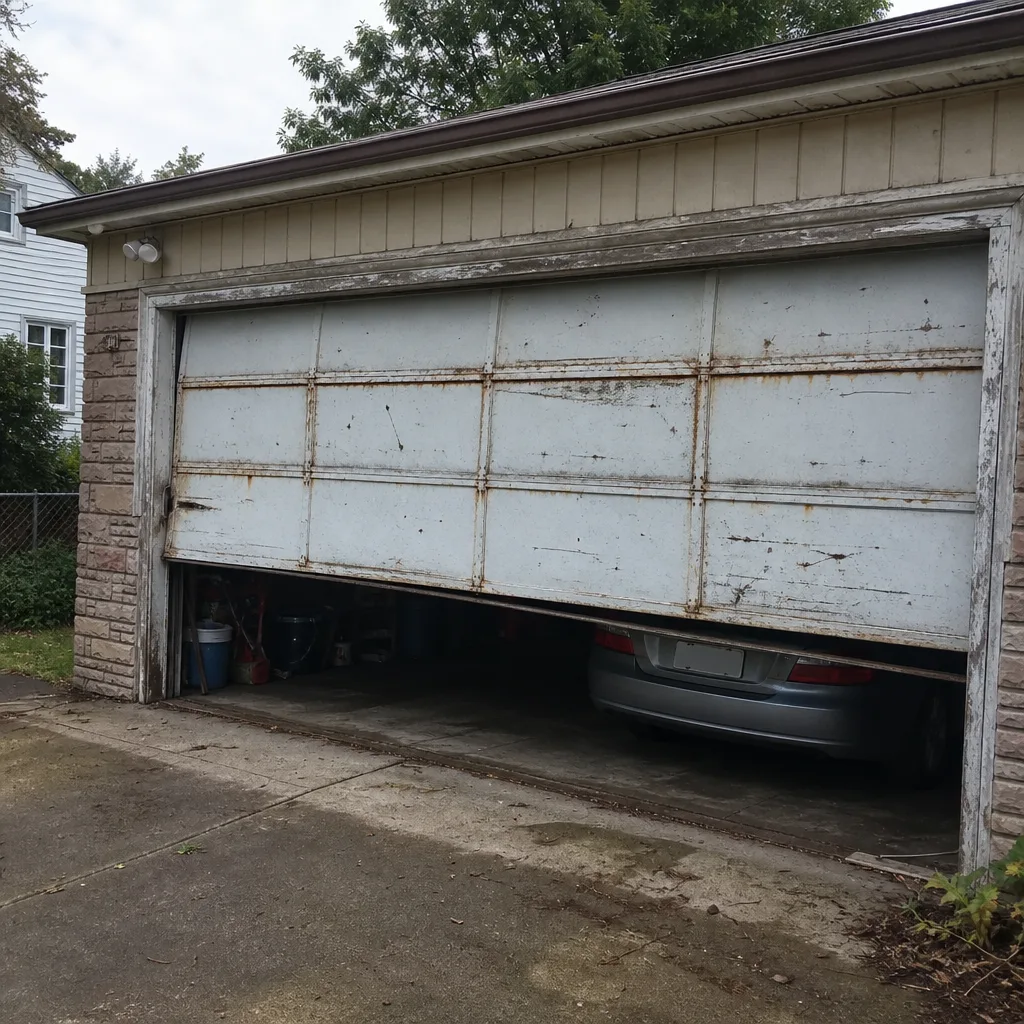 Before
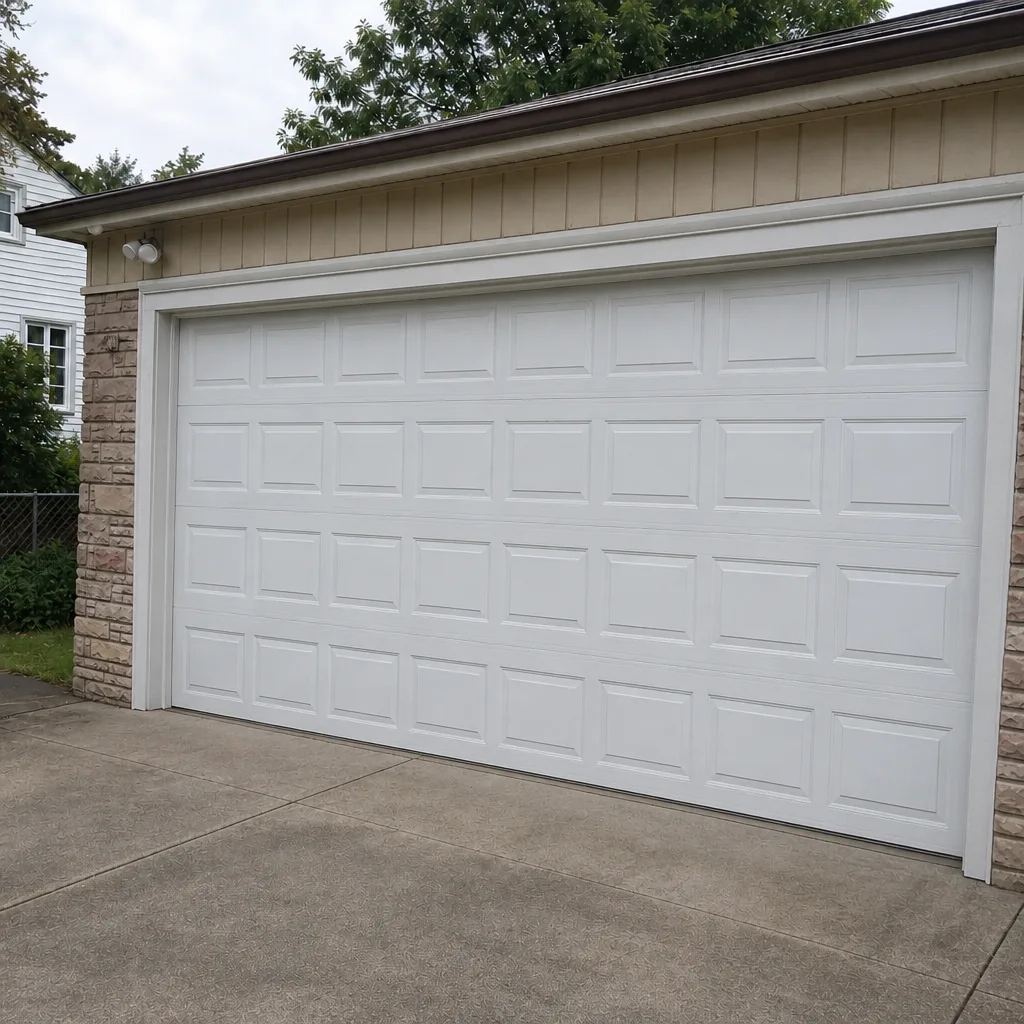 After
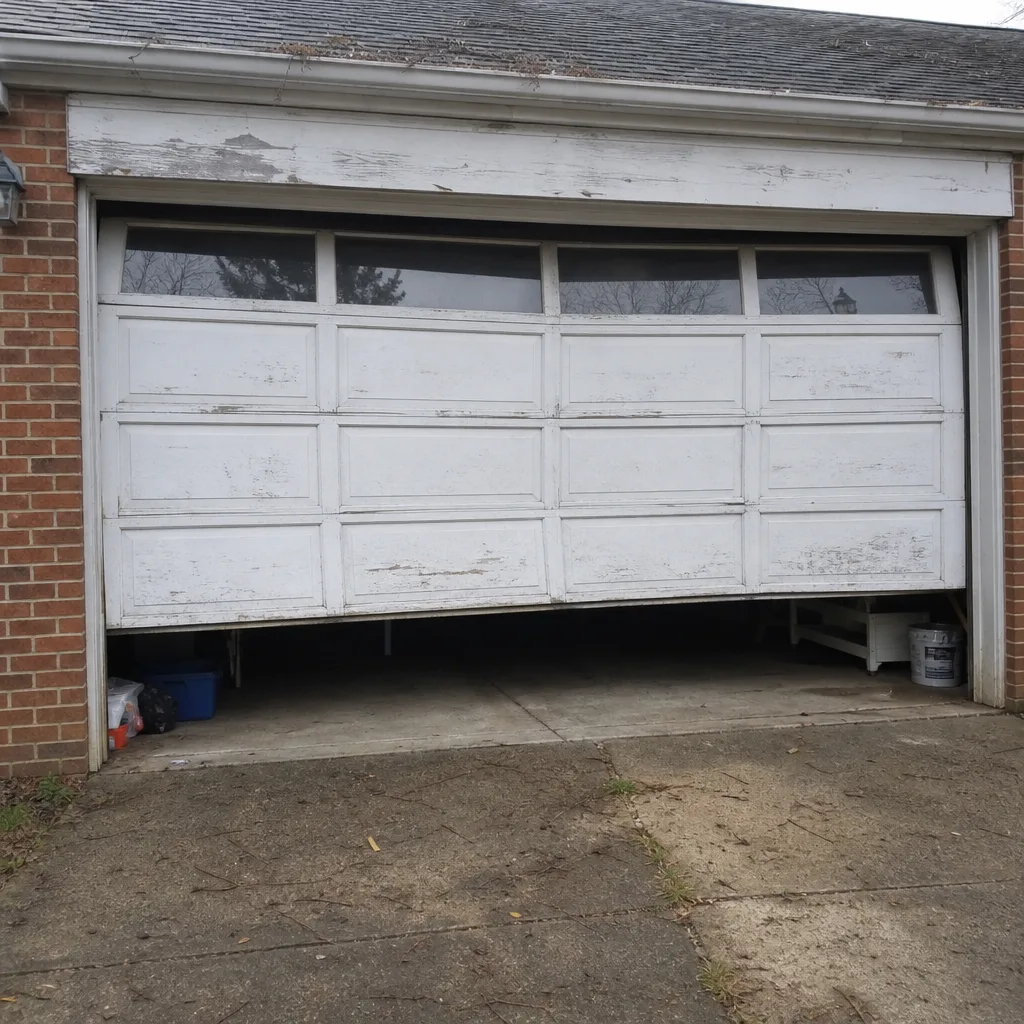 Before
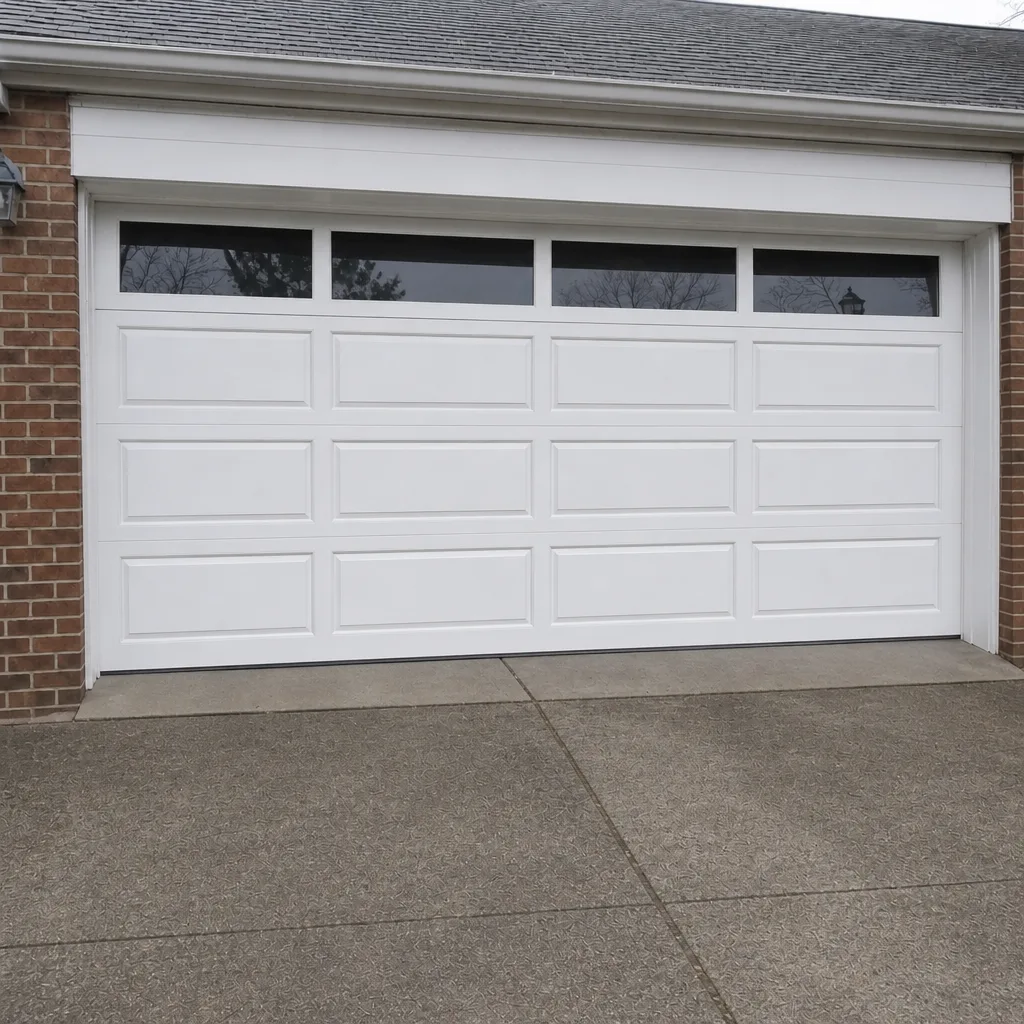 After
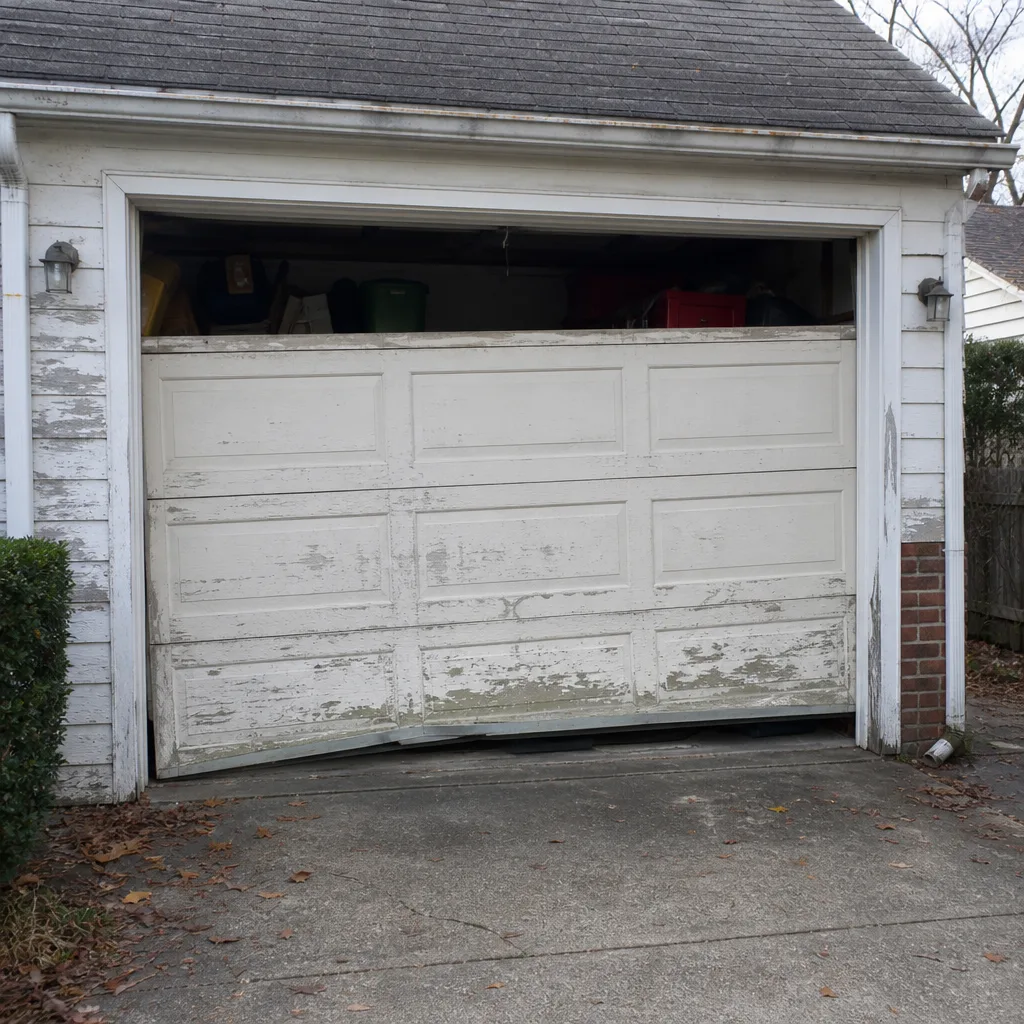 Before
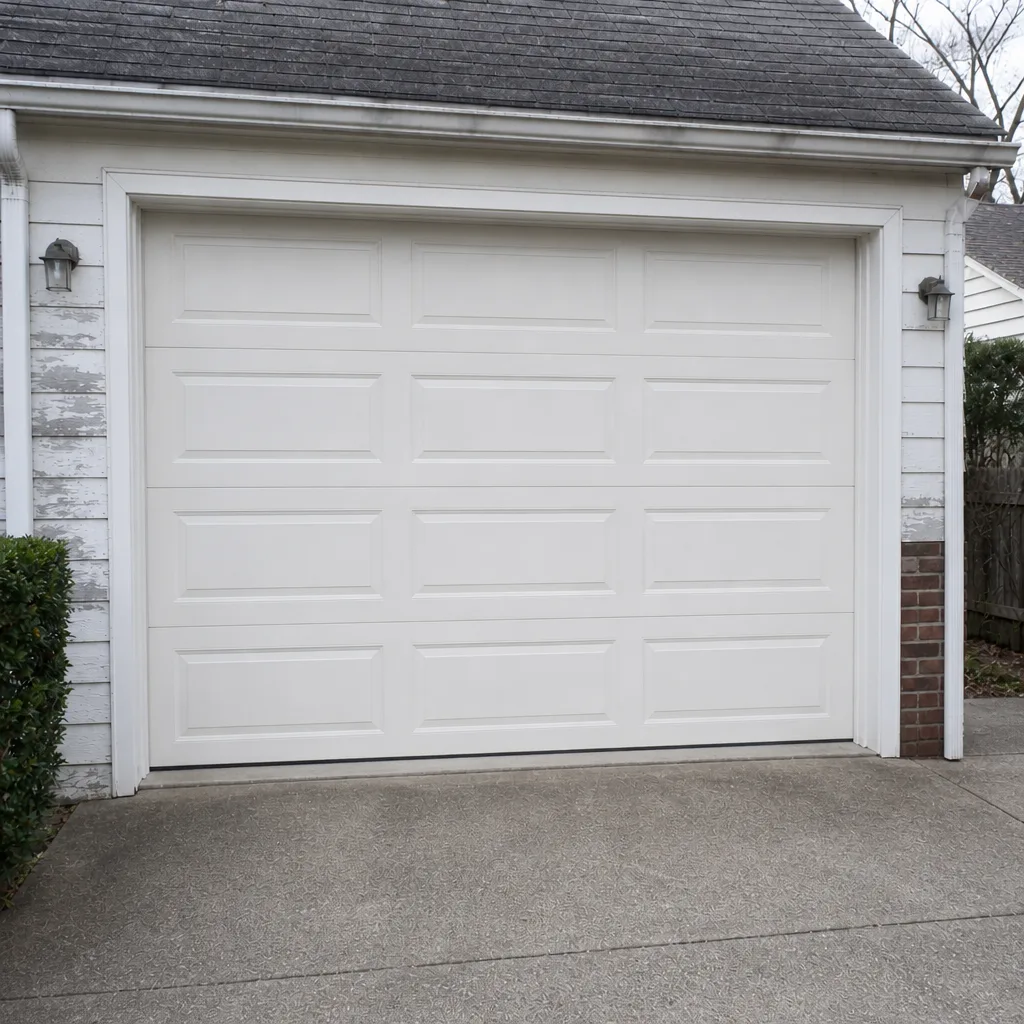 After
When to Call a Professional
Call a professional if the spring is broken, the door is hanging off the track, the opener runs but won’t move the door, or the door reverses before it closes. Those are symptoms that either involve high-tension springs and cables – dangerous to work on without training – or that get worse when pushed. Missing or frayed cables, a door that slams down rather than lowering, opener motors that click without moving, and walls of the garage that show stress around the spring anchor bracket all deserve a look. If the last technician misdiagnosed the issue or ordered the wrong part, that’s also a reason to call – it usually means they didn’t know the specific model.
Highland Park Garage Door Repair Co offers free estimates in Highland Park – call (844) 742-5213. For repair work we aim to respond same day when our schedule allows, and we always confirm the price with you before any work begins. Every estimate is written and agreed up front, so there’s no surprise on the invoice. Our technicians have up to 12 years of experience, and the shop works on LiftMaster, Chamberlain, Genie, Clopay, Amarr, Wayne Dalton, Craftsman, and Raynor systems – so your specific model is one we’ve worked on before. If you’re still deciding between brands, call and ask. A ten-minute conversation with a technician who sees these systems every day is worth more than a week of online reviews.
Frequently Asked Questions
There’s no single best brand – the best brand for a Highland Park home is the one with strong local parts availability and a technician familiar with the model line. LiftMaster and Chamberlain openers generally have the deepest parts and service networks across the Pittsburgh metro, and Clopay, Amarr, Wayne Dalton, and Raynor door lines are all reasonable when the specific model line and warranty terms check out. Call (844) 742-5213 for an exact recommendation on your home.
No. Model line matters more than brand price tier. A premium model from a well-known brand and a builder-grade model from the same brand can perform very differently in Pittsburgh-area weather. Focus on the specific model line’s steel gauge, insulation, spring system, and warranty exclusions rather than on the badge on the door. If you’re comparing quotes, bring them to us and we’ll walk through what actually differs.
Parts for LiftMaster, Chamberlain, Genie, and Craftsman systems are usually the fastest because their parts networks run wide through the Pittsburgh metro. Less common models, including some Raynor and older Craftsman generations, may require the part to be ordered, which can add days to a repair. Ask your technician before scheduling if you’re in a hurry.
Sometimes, and the details matter. Some openers have native Wi-Fi and connect directly to the manufacturer’s app. Others require a separate hub, a subscription, or a discontinued bridge. Before buying, confirm the specific compatibility path – native Wi-Fi, hub-required, or app-only – and ask whether that integration will keep working if the manufacturer updates or ends the app. Call (844) 742-5213 and we’ll help you sort through what a given model actually does.
Yes, mostly at the finish and seams. Freeze-thaw cycles work water into seams and can lift the finish over time, and summer humidity is rough on paint. Steel doors with better seam sealing and thicker factory finishes tend to last longer in this climate regardless of brand. If your door’s finish is failing, it’s worth checking whether the finish warranty still applies – if not, refinishing is usually the practical answer.
Yes. The opener and the door are separate systems. If your door is structurally sound – level, balanced, and running smoothly on its tracks – you can replace the opener alone, and often save the door. What we won’t recommend is replacing an opener on a door that isn’t balanced, because the new opener will take the strain and fail faster. Call (844) 742-5213 for a diagnostic visit first.
The Bottom Line
Picking a garage door brand in Highland Park starts with the model line, not the brand. Choose a specific product family, read its warranty exclusions as carefully as its term length, and confirm that parts for that model have a local network. Between two good brands, the tiebreaker is your local technician’s familiarity with the line – a technical advantage that shows up in the first visit. The best-reviewed door in the country is the wrong door if the nearest parts source is out of state. Get the diagnosis right, buy the model line, install it well, and then let the brand fade into the background. That’s the sequence that produces a garage that stays quiet for years. If you’re still weighing options, call us at (844) 742-5213 and we’ll help you think it through.
Whether you’re choosing a first door, replacing a failing opener, or comparing warranties between brands, the team at Highland Park Garage Door Repair Co is here to help. Our technicians have up to 12 years of experience with LiftMaster, Chamberlain, Genie, Clopay, Amarr, Wayne Dalton, Craftsman, and Raynor systems, and we offer free estimates in Highland Park. We confirm the price with you before any work starts, so you always know what a repair or replacement will cost before we begin.
Written by the team at Highland Park Garage Door Repair Co.