Last updated November 21, 2026
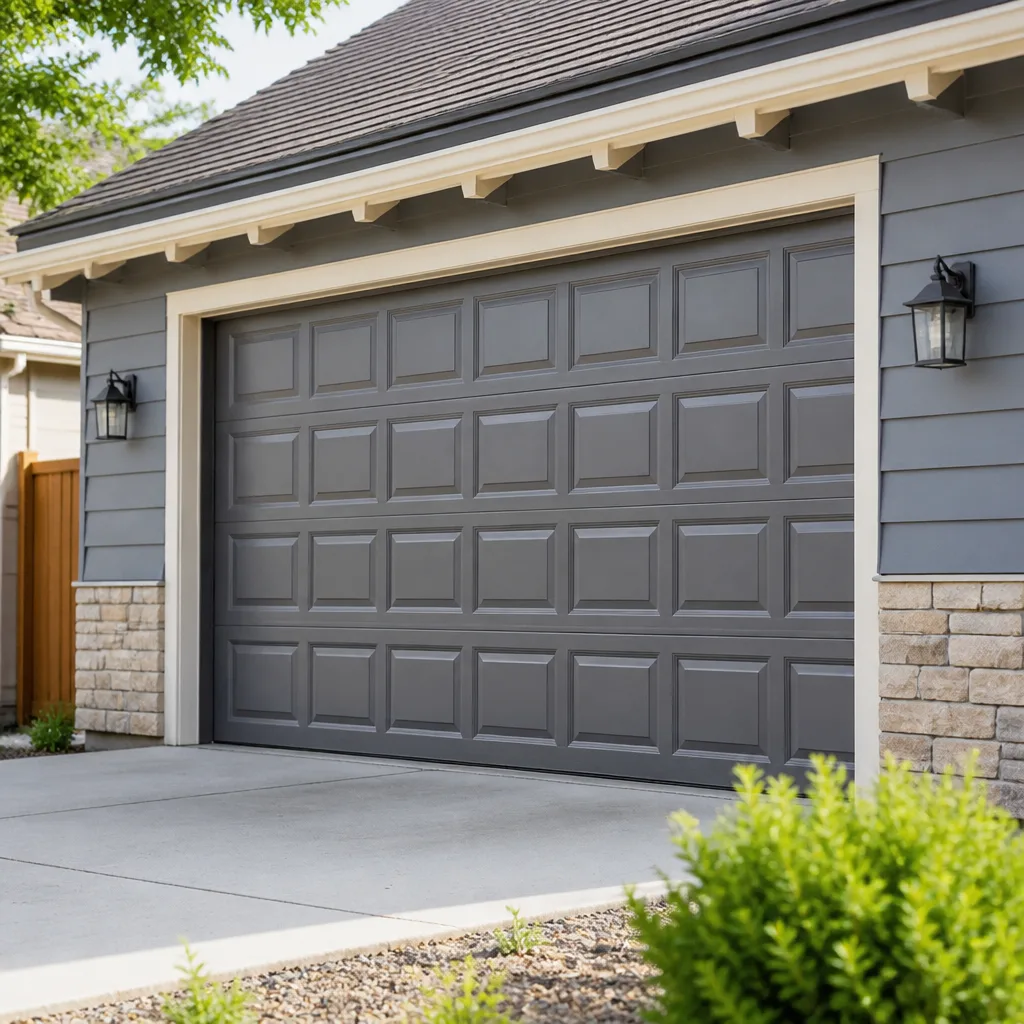 Raised-panel steel
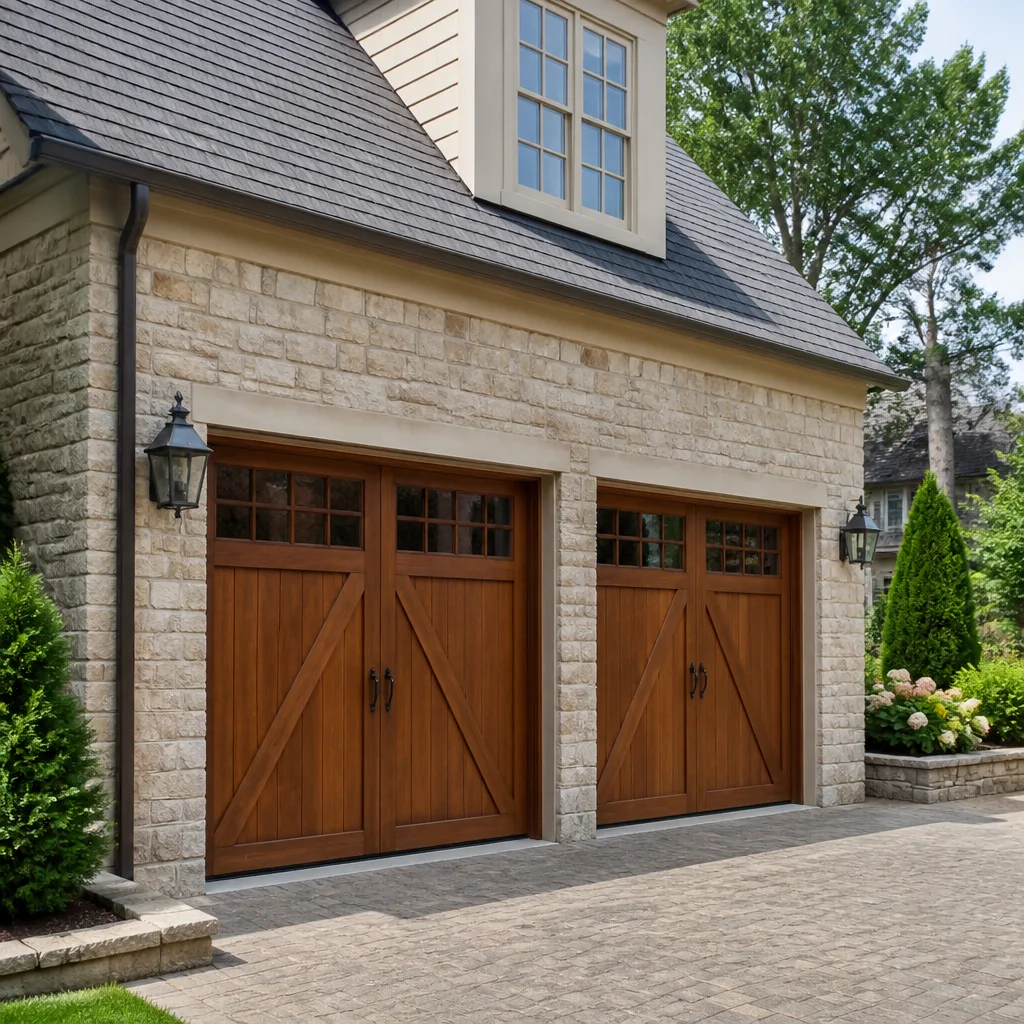 Carriage house
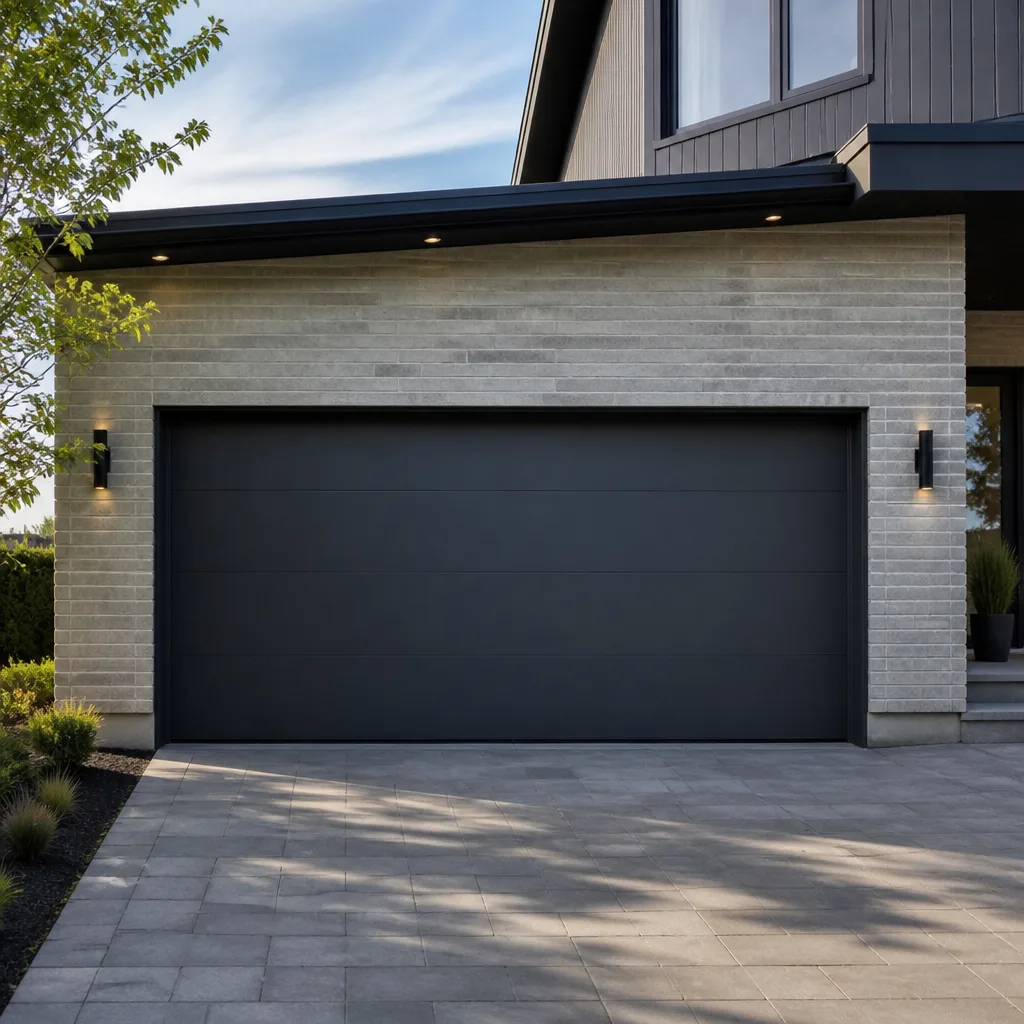 Modern flush
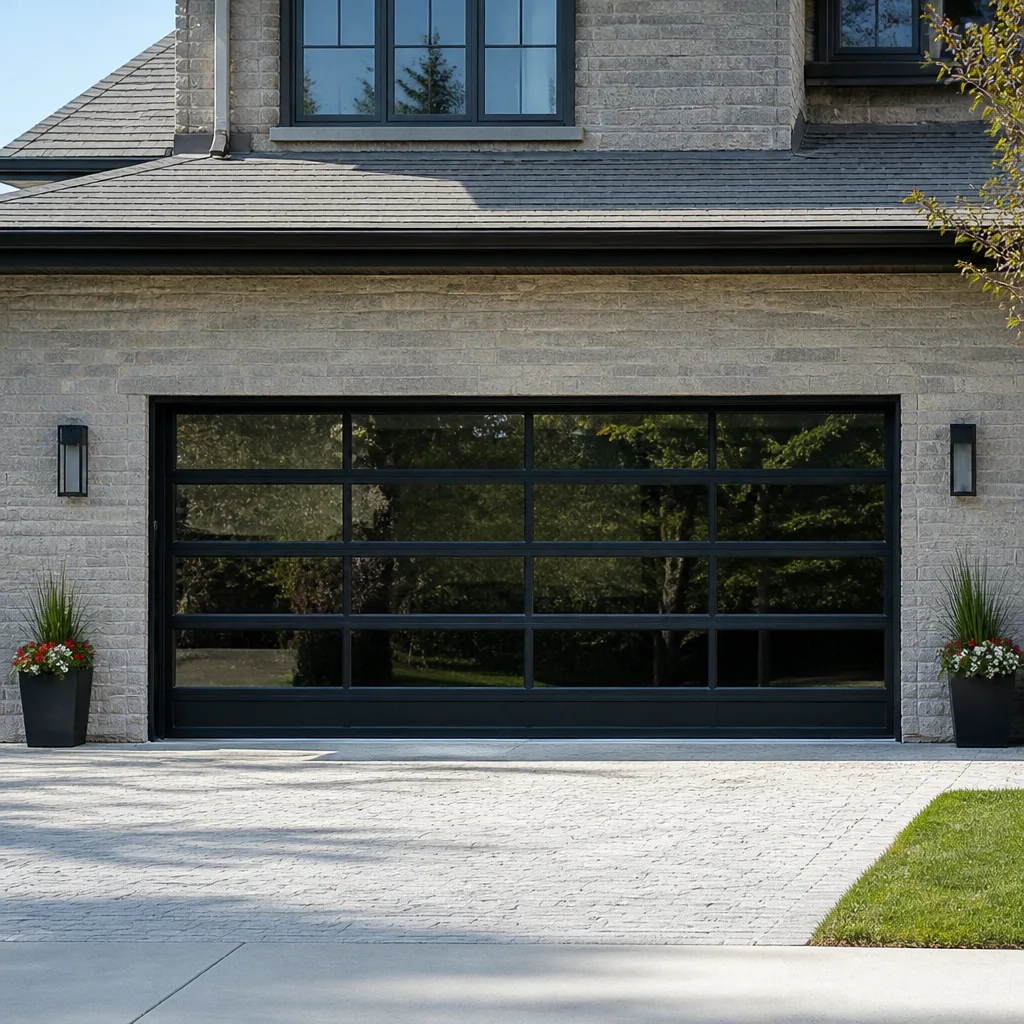 Full-view glass
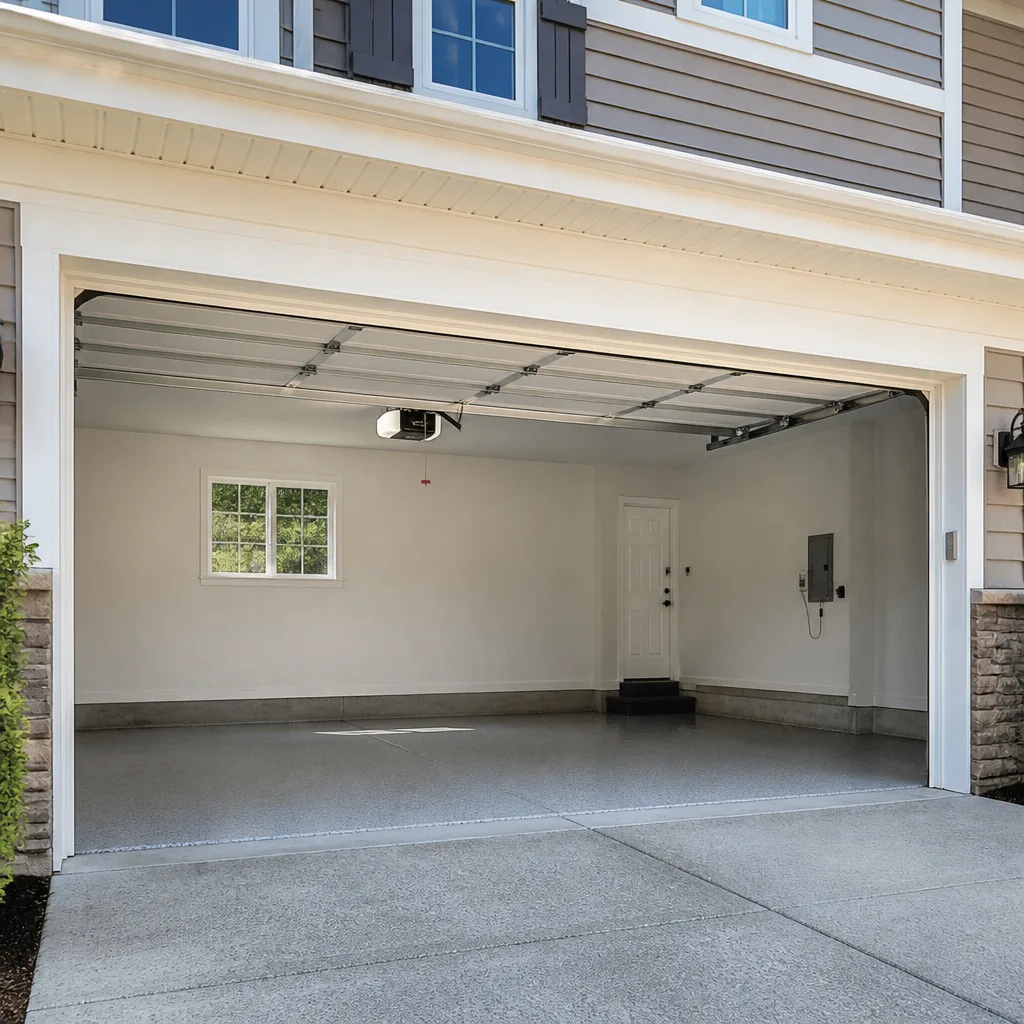 LiftMaster openers
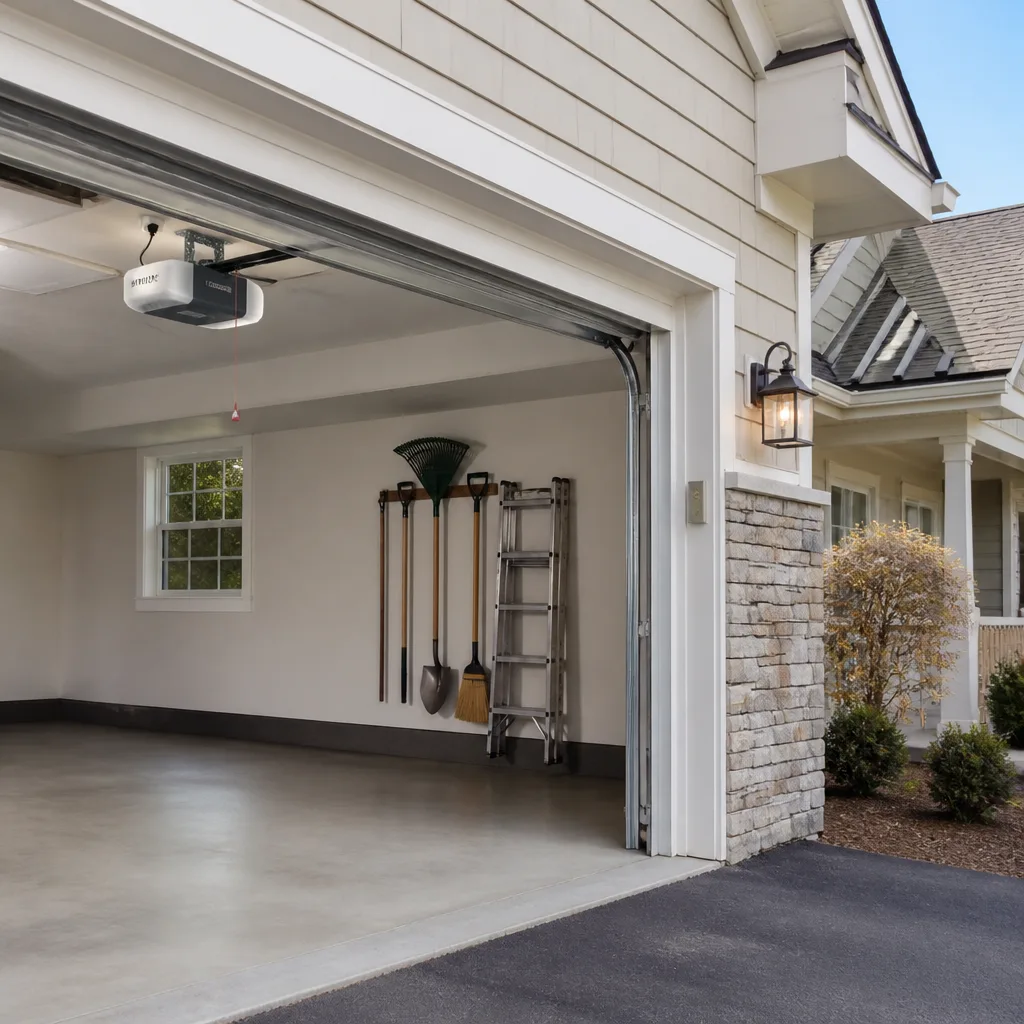 Chamberlain openers
Full 25-point door and opener safety check with every visit - springs, cables, rollers, tracks, and your LiftMaster or Chamberlain opener included
You get a price before we start. It does not change when the pro arrives.
Get your free estimateGarage Door Emergency Preparedness Guide for Highland Park Homes
Most garage door advice starts at the wrong moment: after something has already broken. A door that won’t close at 10pm, a spring that lets go while the car is still inside, an opener that hums and does nothing during an ice storm – these moments are stressful mostly because they’re unplanned. The homeowners who handle them well aren’t luckier than anyone else. They simply know, before anything goes wrong, where the manual release is, what their opener model is called, and which calls to make and which to skip. That’s all “preparedness” means here, and it’s something you can put together in an afternoon in Highland Park. This guide walks you through manual operation for the opener brands most common in the neighborhood, how to secure a door that won’t close, what to do when a spring fails, and exactly what to have ready before you call anyone.
Quick Answer
Garage door emergency preparedness in Highland Park means knowing three things in advance: how to disengage your opener and lift the door by hand, how to physically secure a door that’s stuck open, and what to never attempt yourself – namely anything involving the springs, cables, or the high-voltage side of the opener. When a door won’t close, pull the manual release, lower it by hand if it moves freely, and either lock it or block it until a technician arrives. Call (844) 742-5213 for repairs; estimates are free.
Styles & brands we work with
- Raised-panel steel
- Carriage house
- Modern flush
- Full-view glass
- LiftMaster openers
- Chamberlain openers
Table of Contents
- Why a Stuck-Open Door Is a Security Problem, Not Just an Annoyance
- How to Operate Your Garage Door Manually: Brand by Brand
- How to Temporarily Secure a Door That Won’t Close
- What to Do If a Spring Breaks While the Door Is Open
- Pittsburgh Weather and Your Garage Door: Ice, Power Outages, and Cold
- What to Have Ready Before You Call for Repair
- Your 20-Minute Emergency Prep Checklist
- What You Should Never Do Yourself
Why a Stuck-Open Door Is a Security Problem, Not Just an Annoyance
A garage door that closes but won’t open is a hassle. A door that opens but won’t close is a different category of problem entirely, and it’s the one homeowners underestimate. An open garage bay is an open doorway into the house for as long as it stays that way. On a Highland Park street where houses sit close together, a door stuck open after dark is visible from the sidewalk, and that visibility is the whole issue.
The frustrating part is how long the wait usually feels. Most people discover the problem in the evening, after normal business hours, when their first instinct is to call and hope someone answers. In our experience, the homeowners who suffer least from a stuck door are the ones who already know how to get it down by hand, or how to lock it in place, so the door isn’t standing open while they wait for a scheduled repair.
There’s also a second, quieter cost: a door left propped or blocked for hours can be damaged further. A panel that gets bent, a track that gets pushed out of line by a careless brace, an opener that keeps running against an obstruction – these turn a simple repair into a bigger one. Preparing ahead isn’t about being paranoid. It’s about keeping a bad evening from becoming a bad week.
Highland Park’s housing stock makes this worth taking seriously. Many homes here have attached garages where the garage is the everyday entrance – the door you actually use to come and go. When it fails, it isn’t a side detail of the house. It’s the front door in practice, and it needs a plan.
How to Operate Your Garage Door Manually: Brand by Brand
Every residential opener has a manual release, and the principle is the same across brands: you’re disconnecting the door from the opener’s drive, not from its springs. The springs still carry the door’s weight, and that’s the part to respect. With that understood, here’s how manual operation works for the opener brands we see most often in Highland Park homes.
LiftMaster and Chamberlain
These two are built on the same underlying platform, so the procedure is identical. Look for the release cord hanging from the opener rail. Pull it straight down and slightly toward the door – not at an angle toward the motor – until it clicks. The trolley disengages, and the door can be lifted by hand. To re-engage, lift the door to roughly waist height, pull the cord toward the door until it snaps back, then run the opener once to reconnect the trolley.
Genie
Genie openers use a similar pull-cord release, though on some models the mechanism is a lever rather than a cord. The lever pulls down and toward the door. Genie’s trolleys can be stubborn to re-engage if the door isn’t at a mid-travel position, so if the opener won’t reconnect, try again with the door a little higher or lower rather than forcing it.
Raynor
Raynor systems, often paired with Raynor doors, use a standard trolley release as well. The one thing to watch with older Raynor setups is a stiffer release that hasn’t been exercised in years – if the cord feels frozen, don’t yank it. Work it gently; a release that won’t move is a sign the opener needs service, not force.
One universal caution: before you pull any manual release, make sure the door is fully closed, or that you can physically hold it. If the door is up and the springs are compromised, disengaging the opener hands the full weight of the door to you. Our technicians have up to 12 years of experience, and the first thing any of them will tell you is that a garage door weighs far more than it looks like it does. Test the door’s weight by lifting it a few inches with the opener still engaged. If it’s heavy or won’t stay put, leave the release alone and call for help.
How to Temporarily Secure a Door That Won’t Close
If your door is stuck open and you need it secured before a technician can arrive, there are three methods that work without damaging the system. Pick the one that matches your door and your situation. None of them require touching the springs, cables, or opener wiring – and none of them should.
- Manual release and hand-lower. If the door moves freely by hand after you pull the release, lower it slowly and fully to the ground. Once it’s down, it’s closed. This is the cleanest solution when the door’s springs are intact and only the opener has failed. Have someone spot the door as it comes down in case it binds.
- Lock the door in the track. On doors with a manual slide lock or a lock bar, engage it once the door is down. On doors without one, a set of locking pliers clamped onto the vertical track just above a roller, or a length of wood wedged between the door and the frame, will hold it in place from the inside. This works for a door that closes but won’t stay shut, or for holding a door down after you’ve lowered it.
- Block the opening from inside the garage. If the door cannot be lowered at all, park a vehicle close to the opening from the inside, or brace a piece of lumber across the opening at a height where it won’t stress a panel. The goal is to make the opening hard to enter, not to seal it airtight.
A few things to avoid. Don’t prop the door with a brick or block under a single corner – it twists the panel and can crack it. Don’t try to force the door down against the opener’s resistance; that’s how you burn out a motor or strip a gear. And don’t leave a door balanced partway open on a disengaged opener, especially in a Highland Park home where the garage opens to the street. A door that’s half up on a disconnected opener can drop without warning.
When a door is stuck open and you can’t get it down safely, that’s a call worth making. We handle garage door repair for situations exactly like this, and the earlier you call, the more repair options you have.
What to Do If a Spring Breaks While the Door Is Open
A spring that breaks while the door is up leaves the door in its most dangerous state: open, unsupported, and heavy. The spring is what counterbalances the door’s weight. When it fails, the door’s full weight is being held by the opener’s drive, the cables, or whatever else happens to be holding it. This is the moment to be careful, not clever.
Here’s what to do, in order:
- Stop using the opener. Don’t press the button again, and don’t keep trying to close the door from the wall control or a remote. Every cycle adds load to a door that’s already compromised.
- Keep people and vehicles clear of the door. Don’t walk under it, don’t park under it, and don’t let anyone lean on it.
- If the door is fully open and the springs are broken, do not attempt to close it by hand. A door with a failed spring can come down fast and hard. Leave it where it is and call a professional.
- If you must secure the opening, do it from the inside and away from the door’s path, using the blocking method above rather than trying to move the door.
- Call for spring repair – not a general handyman. Spring work is the most hazardous job in this trade, and it’s a named service we handle on purpose. Our Highland Park Garage Door Repair Co team treats a broken spring as its own category of repair, not an add-on to a tune-up.
What not to do: don’t try to wind, unwind, or remove a spring yourself, don’t cut a cable to “release” the door, and don’t trust a door that seems fine after a spring breaks. A door on one spring is running at half its designed support, and the remaining spring is now doing twice the work. A matched pair is usually replaced together for exactly this reason. If one spring has failed, plan on replacing both, and expect a pair to cost about twice what one spring does.
Pittsburgh Weather and Your Garage Door: Ice, Power Outages, and Cold
Highland Park sits in a climate with real winters: freeze-thaw cycles, ice storms that coat everything, and the occasional multi-day power outage. Each of those has a specific effect on garage door systems, and each is worth preparing for before it happens.
Ice and freezing rain
The weak points in cold weather are the bottom seal and the gap where the door meets the floor. Freezing rain can bond the seal to the concrete, and if you hit the opener, you’ll tear the seal or strain the opener’s drive. The prep is simple: before a forecast ice event, make sure the bottom seal isn’t already cracked or waterlogged, and keep the threshold clear of snow and standing water. If the door is frozen shut after a storm, free it gently by hand with a plastic scraper – never force it with the opener.
Power outages
When the power goes out, your opener is dead and the door is exactly as heavy as its springs allow. This is where the manual release matters most, and where the brand familiarity helps: LiftMaster, Chamberlain, Genie, and Raynor all use a pull-release, but the re-engage procedure differs slightly, and doing it wrong under stress is common. Test your manual release once, on a calm day, so you know how it feels before you need it in the dark.
Cold and lubrication
Metal contracts in cold, and a door that ran smoothly in October can bind in January. Rollers, hinges, and the track benefit from a proper garage-door lubricant before winter sets in – not WD-40, which attracts grit. A door that’s stiff, noisy, or slow in cold weather is telling you something needs attention before the next freeze.
Storm prep
Before a forecast storm, close the door fully rather than leaving it partway. A partially open door catches wind and puts load on the panels and tracks. If you’re expecting high wind, clear anything loose from the garage near the door so it can’t blow into the panels if the door is opened during the storm. And if a storm is coming and your door has been giving you warning signs – a slow close, a grinding sound, a hesitation – that’s the week to get it looked at.
What to Have Ready Before You Call for Repair
The single biggest difference between a fast, accurate repair call and a frustrating round of phone tag is information. When you call for a garage door emergency in Highland Park, the technician on the other end can give you a realistic timeframe and a useful estimate only if they know what they’re dealing with. Have these five things ready before you dial.
- The door’s brand and model. Look for a label on the inside of the door panel or on the opener housing. Clopay, Amarr, Wayne Dalton, and Raynor are common door brands here, and opener brands like LiftMaster, Chamberlain, Genie, and Craftsman all have recognizable housings. A photo of the label is even better.
- The symptom, described precisely. “It won’t close” is a starting point. “The opener runs but the door doesn’t move,” “the door closes halfway and reverses,” or “there’s a loud bang and the door is hanging” gives a technician much more to work with.
- The door’s current position. Fully open, fully closed, halfway, or hanging unevenly. This matters because it determines safety and urgency.
- What you’ve already tried. Did you pull the release? Press the wall button? Check the breaker? Knowing this prevents a repeat of steps you’ve already taken.
- Your address and any access notes. An alley-approach garage, a steep driveway, or a door that’s blocked by a vehicle are all worth mentioning up front.
With that information, a repair company can tell you whether you’re looking at a spring, an opener, a track, or a sensor issue, and give you a realistic estimate. Without it, you’ll likely be asked to take photos and call back. We work on all 8 of the most common residential door and opener brands – LiftMaster, Chamberlain, Genie, Clopay, Amarr, Wayne Dalton, Craftsman, and Raynor – which means the person on the phone recognizes your system and the right part is more likely to be on hand for a single visit.
Your 20-Minute Emergency Prep Checklist
This is the part you can do this weekend, before anything breaks. Twenty minutes of prep saves hours of stress later. Work through it once, and you’ll know exactly what to do when the door misbehaves.
- Find and test your manual release. Locate the release cord or lever on your opener rail. Pull it once with the door closed, confirm the trolley disengages, then re-engage it and run the opener to confirm it reconnects. Do this on a calm day, not during an emergency.
- Write down your door and opener brands and models. Photograph the labels. Keep the photos in your phone so you have them when you call.
- Learn the weight test. With the opener engaged and the door closed, lift the door a few inches by hand. It should feel manageable. If it’s very heavy or won’t stay put, your springs need attention before they fail.
- Store a manual lock or locking pliers in the garage. Know where they are. These are your securing tools if the door won’t close.
- Check the bottom seal and weatherstripping. Cracked or missing seals let water and cold in, and they bond to ice in winter. Replace them before the first freeze.
- Lubricate the moving parts. Rollers, hinges, and tracks, with a proper garage-door lubricant. Do this in fall, before cold weather.
- Test the safety reverse. Put a roll of paper towels in the door’s path and close it. The door should reverse on contact. If it doesn’t, the opener needs service.
- Keep the opener’s manual handy. Most are downloadable from the manufacturer’s site. Look yours up by brand and model while the internet is working.
If any step reveals a problem – a door that’s hard to lift, a seal that’s shot, an opener that won’t reverse – that’s your cue to schedule service before it becomes an emergency. A free estimate is cheaper than an emergency call, and a planned repair is always less stressful than a stuck door.
What You Should Never Do Yourself
A prepared homeowner knows the line between what’s safe to handle and what isn’t. On a garage door, that line is clearer than most people realize, and it’s worth stating plainly.
Never touch the springs. The torsion spring above the door and the extension springs along the tracks are under enormous tension. A spring that’s still wound, or one that’s partially failed, can release violently with no warning. This is the single most dangerous component on the entire door, and it’s the reason spring repair is a trained-professional job. We treat it as its own service for exactly this reason.
Never cut or loosen a cable. Cables are under tension too, and a slack or snapped cable can whip. If a cable looks frayed or loose, stop using the door and call.
Never open the opener housing to work on the motor or wiring. The opener runs on household current. Any electrical work inside the housing is a job for a qualified technician.
Never force a door that’s stuck, binding, or off its track. Forcing it bends panels, warps tracks, and can bring the door down. If it won’t move freely, stop.
Never stand under an open door with a suspected spring failure. That’s the one position where a door failure becomes a serious injury. Keep clear and call.
If you’re ever unsure whether something is safe to touch, it isn’t. Call a professional and let them make that call. Our technicians have up to 12 years of experience, and they’ll tell you honestly what’s safe and what isn’t.
Common Mistakes to Avoid
- Pressing the opener button repeatedly when the door won’t move. Every press strains the motor and the drive. If the door isn’t moving, stop pressing and diagnose.
- Pulling the manual release while the door is up and the springs are suspect. This hands the door’s full weight to you. Test the door’s weight first, and release only when you can control the door.
- Propbing a stuck door with a brick or block under one corner. It twists the panel and can crack it. Use a proper lock or a brace across the opening instead.
- Calling a general handyman for a spring or opener problem. A generalist may not carry the right part for your brand, and spring work requires specific training. A specialist gets it right the first time.
- Ignoring warning signs in fall. A door that’s slow, noisy, or stiff in October is telling you something. In a Highland Park winter, that warning becomes a breakdown.
- Not knowing your door’s brand and model when you call. Without it, the repair call takes longer and the right part may not be ready. Photograph the labels now.
- Assuming a single spring replacement is fine. Springs wear together. A matched pair is usually replaced together so the door stays balanced; replacing one leaves the other doing double duty.
See the difference
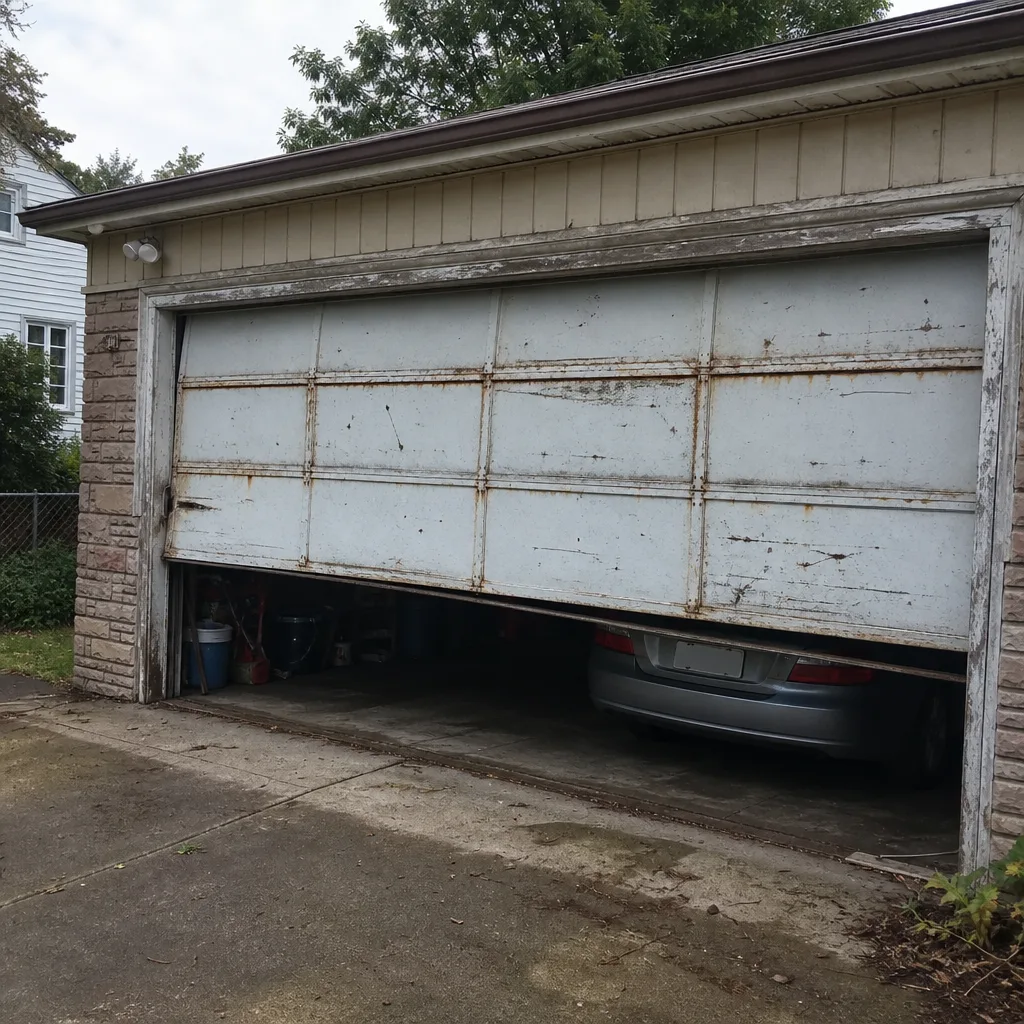 Before
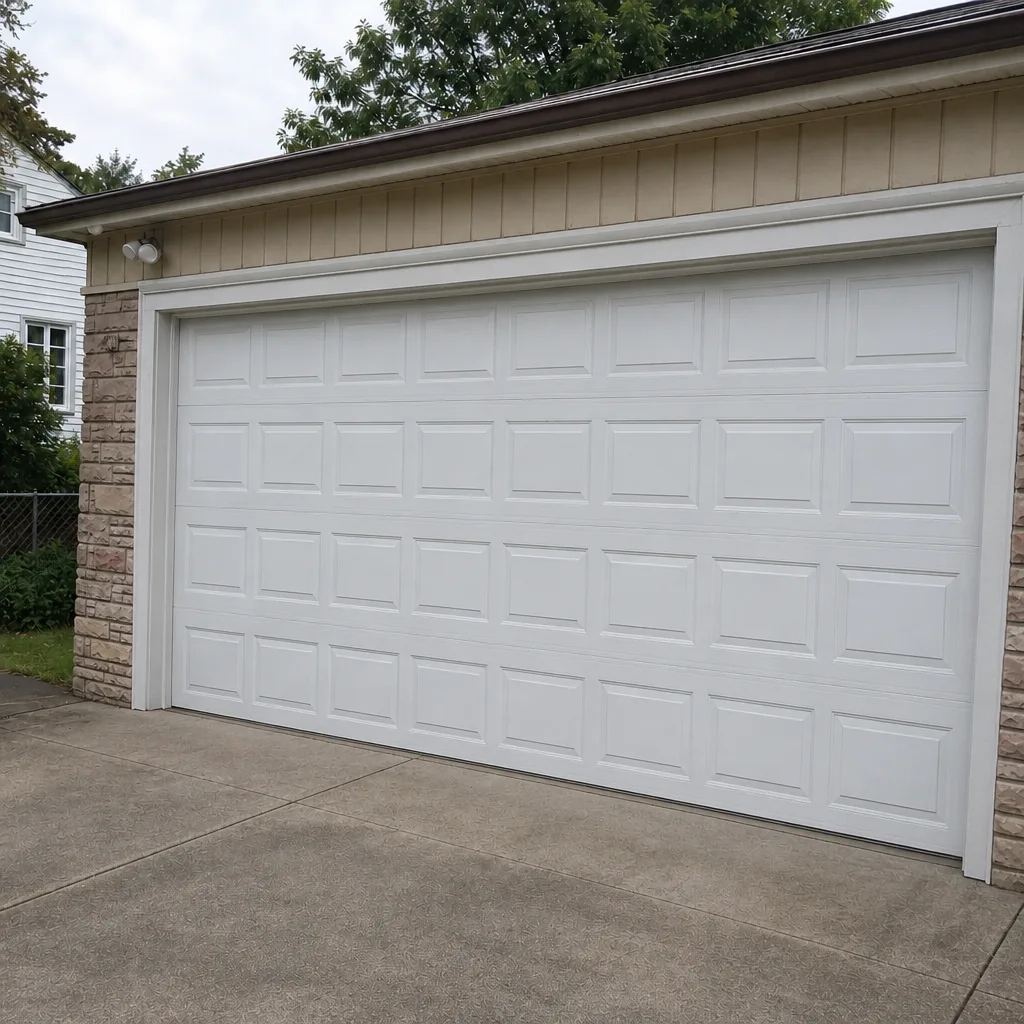 After
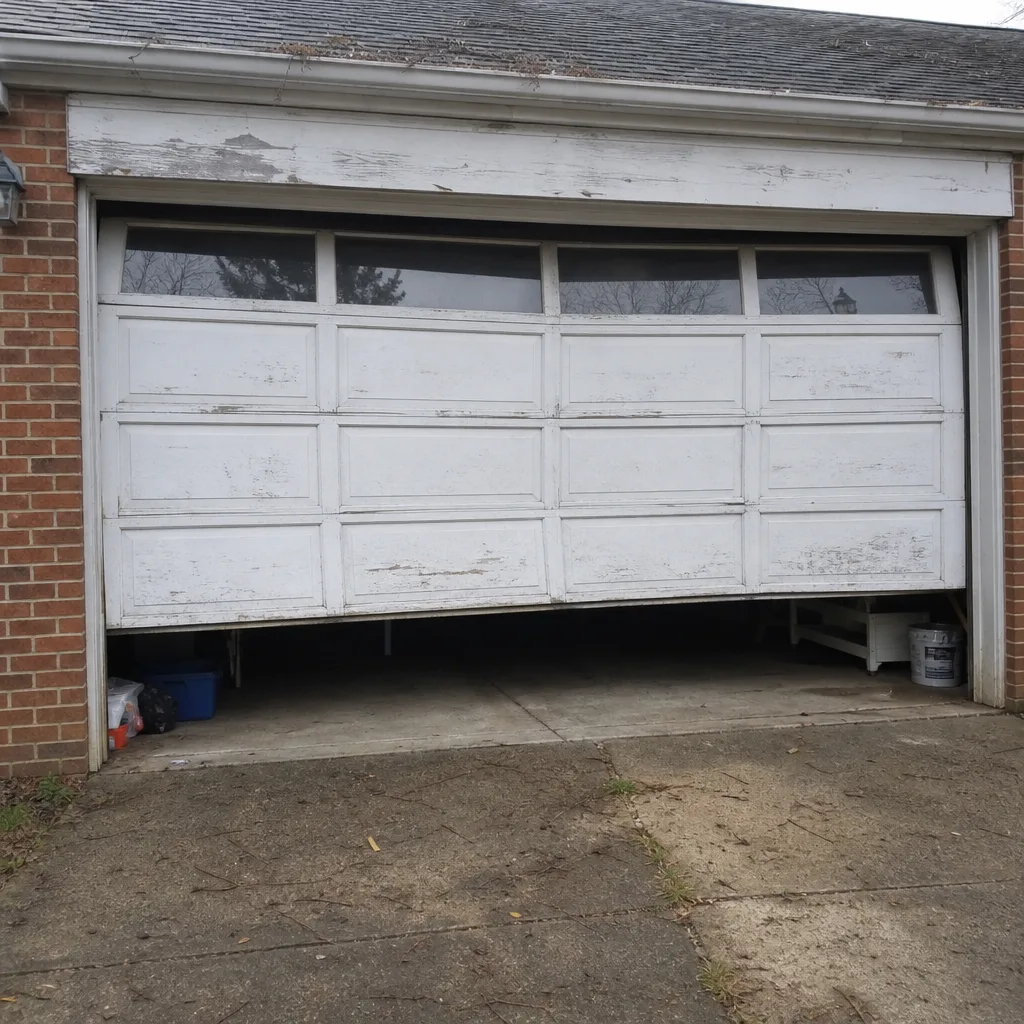 Before
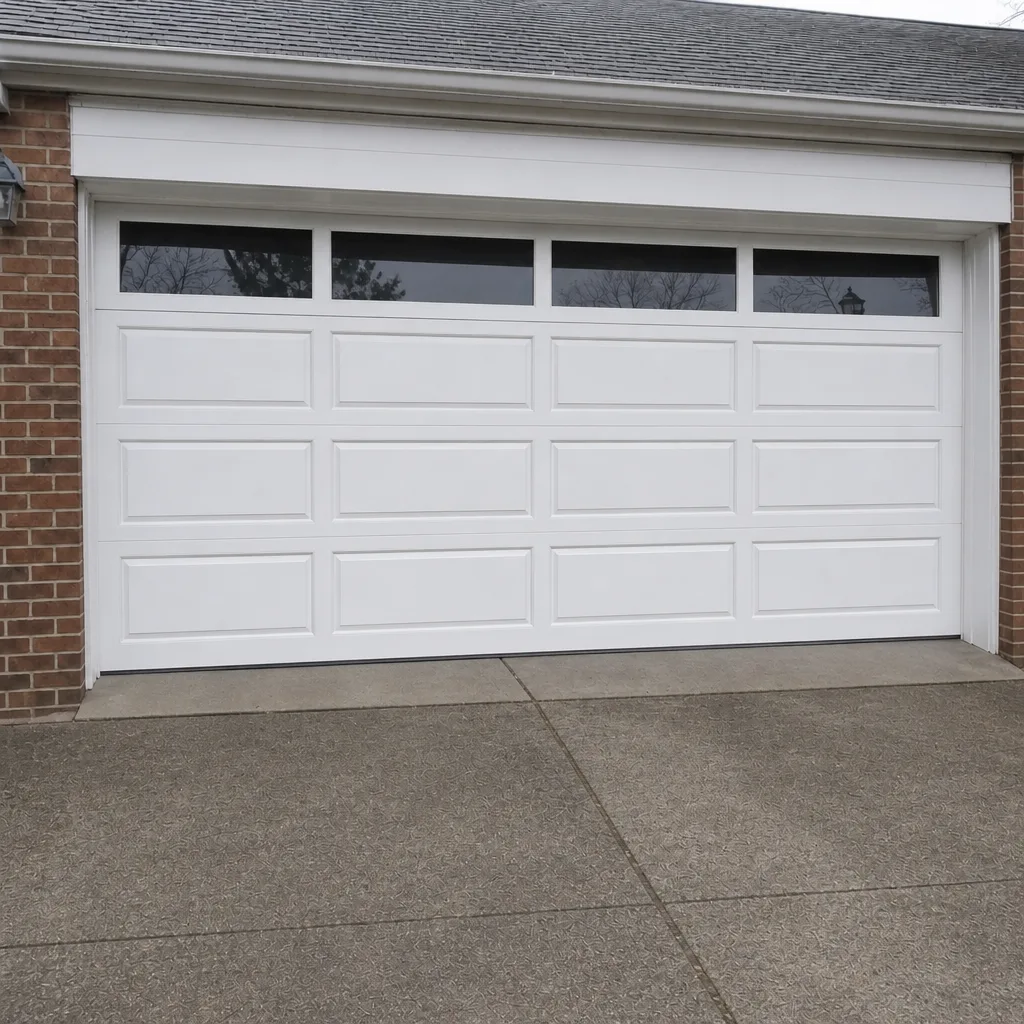 After
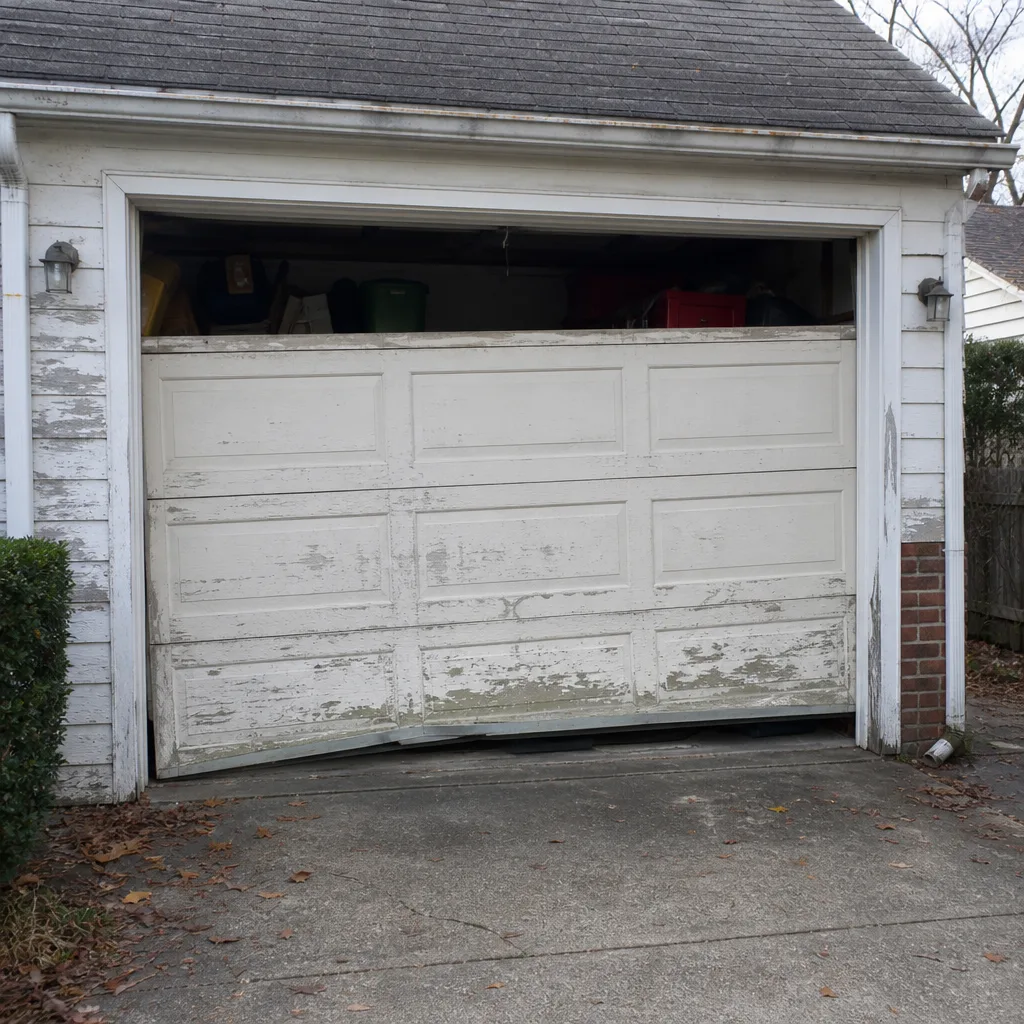 Before
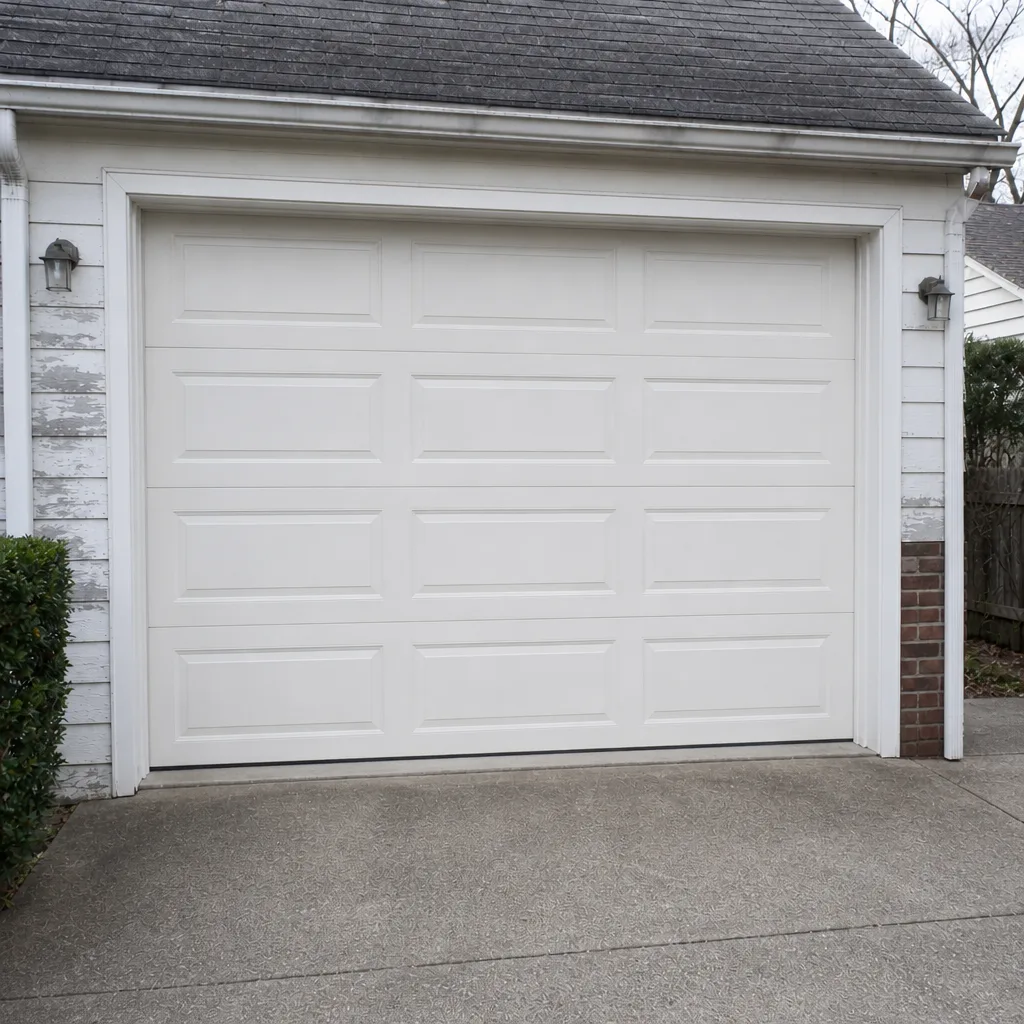 After
When to Call a Professional
Some garage door problems are cosmetic. Others need a trained technician, and knowing the difference is what this guide is for. Call a professional if a spring has broken or looks stretched or separated, if a cable is frayed or loose, if the door is off its track or hanging unevenly, if the opener runs but the door doesn’t move, if the door reverses or won’t close completely, or if the door feels dangerously heavy to lift. Call immediately if the door is stuck open and you can’t secure it, especially at night. And call before winter if your door has been noisy or slow, rather than waiting for a cold-weather failure. Highland Park Garage Door Repair Co offers free estimates in Highland Park – call (844) 742-5213, and have your brand, model, symptom, and door position ready. We handle garage door opener repair and spring work as core services, not afterthoughts, and we can talk you through securing the door while you wait.
Frequently Asked Questions
Pull the manual release cord or lever hanging from the opener rail, then lift the door by hand. The release disconnects the door from the opener’s drive; the springs still carry the weight. Test the door’s weight first with the opener engaged – if it’s very heavy, don’t release it. If you’re unsure, call (844) 742-5213 and we’ll walk you through it.
Pull the manual release, lower the door by hand if it moves freely, and lock or block it in place. If the door won’t come down, block the opening from inside the garage rather than forcing it. Then call for repair – a door stuck open overnight is a security concern, and estimates are free.
No. Garage door springs are under extreme tension and can cause serious injury if they release unexpectedly. This is a job for a trained technician, and it’s one we handle as a dedicated service. Don’t attempt to wind, unwind, or remove a spring – call (844) 742-5213 instead.
Spring repair pricing depends on the spring type, the door’s size, and whether one or both springs need replacing. A matched pair is usually replaced together, so plan on a pair costing about twice what one spring does. We give a written estimate before any work starts, and it’s free – call (844) 742-5213 for an exact quote.
The most common causes are a disengaged manual release, a stripped opener gear, or a broken spring. Check first whether the release cord has been pulled – if it has, re-engage it. If that’s not it, the opener or springs need a technician’s look. We work on LiftMaster, Chamberlain, Genie, and other major brands; call for a free estimate.
Lubricate the rollers, hinges, and tracks with a garage-door lubricant, check the bottom seal for cracks, and test the safety reverse before cold weather sets in. If the door is noisy or slow, get it serviced before the first freeze rather than after. A free estimate now beats an emergency call later – call (844) 742-5213.
The Bottom Line
Garage door emergencies are rarely about the door. They’re about the timing – the spring that breaks at 7am, the door that won’t close before a storm, the opener that dies during an outage. The homeowners who come through those moments calm are the ones who took twenty minutes beforehand to learn their manual release, photograph their brand and model, and know which calls to make. None of that requires a technician. All of it makes the difference between a stressful evening and a scheduled repair. Highland Park winters will test your door; preparation means you’ll know exactly what to do when they do. One last thing worth repeating: never touch the springs. Everything else in this guide is yours to handle safely. When a spring, cable, or opener problem shows up, we’re here for it – new doors too. If you’re planning a replacement rather than a repair, our garage door installation service starts with a measure and a written price, so you know the cost before anything is ordered.
Call (844) 742-5213 for a free estimate. We’ll help you get your door back to working order, or talk you through securing it safely until we can.
Written by the team at Highland Park Garage Door Repair Co.